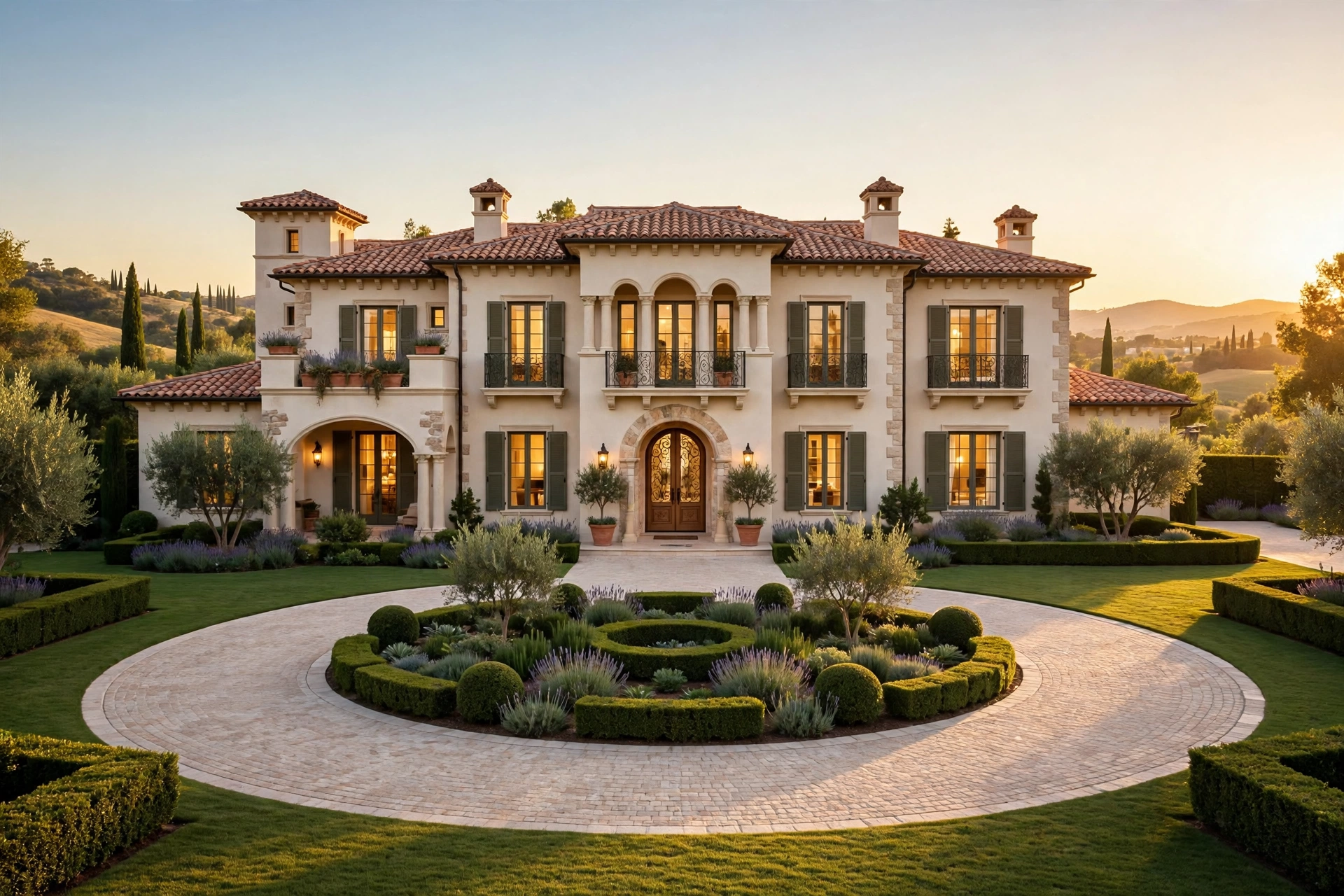

Choose the Shelf Before the Decor
Standard floating shelves run 24 to 48 inches long, 8 to 12 inches deep, and 1.5 to 2 inches thick, and that footprint fits dinner plates, hardcover books, and most display pieces without crowding.
Five shelf types carry nearly every shelf decor plan in a house. Floating shelves hide their brackets inside the board, so the display looks light and modern. Picture ledges run only 4 to 4.5 inches deep, which suits framed art and records but excludes bowls and planters. Bracket shelves carry the heaviest loads, because two steel brackets screwed into studs support long spans of solid wood. Bookcases and built-ins trade wall space for rows of shelving that need no mounting at all.
Spacing matters as much as the shelf itself. Leave 12 to 15 inches between shelves for books and dishes, 10 to 12 inches for small decor, and 18 to 24 inches where tall vases or trailing plants will sit. One concrete test helps before you drill: tape the shelf outline on the wall with painter’s tape and live with the tape for a day. An IKEA Lack shelf at 43 1/4 inches long and 10 1/4 inches deep, for example, swallows a full row of cookbooks yet looks lost on a 12-foot wall unless a second shelf joins it.
| Shelf type | Typical size | Safe load (stud-mounted) | Average price (2026) | Best rooms |
|---|---|---|---|---|
| Floating shelf | 24-48 in long, 8-12 in deep | 30-50 lb | $25-$80 each | Living room, bedroom |
| Picture ledge | 24-48 in long, 4-4.5 in deep | 15-25 lb | $20-$45 each | Hallway, living room |
| Bracket shelf | 24-60 in long, 8-12 in deep | 50-75 lb per bracket pair | $15-$60 plus brackets | Kitchen, home office |
| Bookcase | 30-36 in wide, 10-12 in deep | 40-60 lb per shelf | $80-$400 | Living room, home office |
| Built-in shelving | Custom width, 10-14 in deep | 60 lb or more per shelf | $500 and up per wall | Living room, library |

Style With Three Rules: Odd Groups, Triangles, Empty Space
Shelves look styled when objects sit in odd-numbered groups, heights rise and fall inside each group, and 25 to 30 percent of every shelf stays empty.
Group Items in Odd Numbers
Threes and fives read as collected, while pairs read as lined up. A tall vase, a flat stack of two books, and one small bowl form a complete group with three different heights and three different materials. Your eye settles on odd groups longer, because no single center point lets it stop and move on. Two groups per 36-inch shelf is the working standard across most styled photos you see in 2026 catalogs.
Vary Heights to Draw Triangles
Picture a triangle inside every group: one tall point, one medium, one low. Flat book stacks act as risers, lifting a candle or a small plant into the medium slot without buying a taller object. Across a whole bookcase, stagger the tall pieces in a zig-zag, top left, middle right, bottom left, so the eye travels instead of dropping straight down one side. Uniform rows of same-height jars flatten a display faster than any other mistake.
Leave Negative Space on Purpose
Empty surface is a design material, not wasted room. Gaps between groups tell the eye where one idea ends and the next begins, and they keep dusting quick. Remove one item from every shelf, if the wall behind the display has disappeared completely. Standing six feet back gives the honest view: groups should read as separate islands with clear water between them.
Let Books Do Half the Work
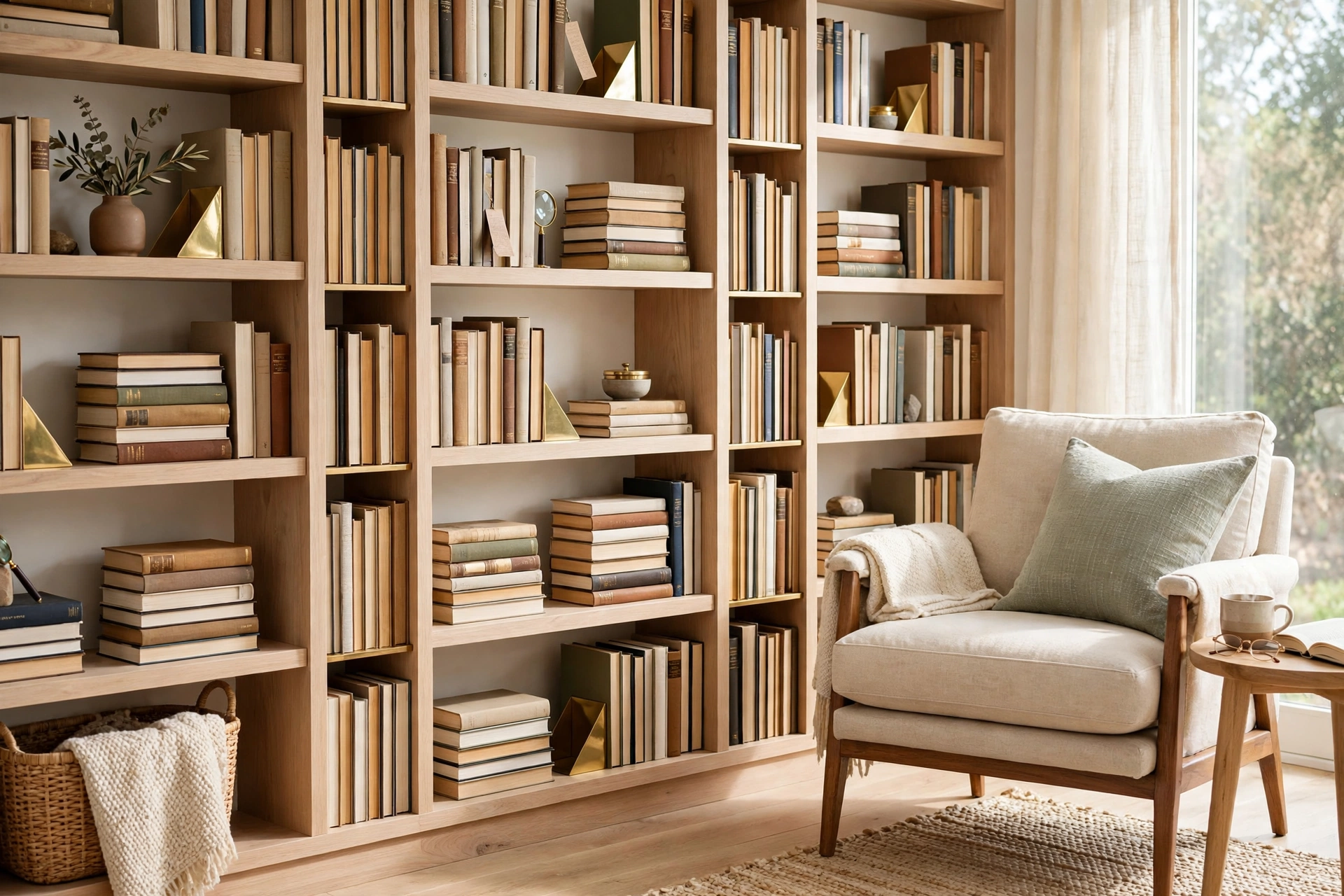
Books are the most useful shelf decor you already own, because one shelf of mixed upright rows and flat stacks gains height, color, and texture at zero added cost.
Keep upright rows slightly loose rather than jammed tight. Heavy bookends in stone, cast iron, or marble hold a row steady when you pull one volume out, while light wooden bookends slide and dump the row. Flat stacks of two to four books break up the vertical rhythm and double as display stands. Color grouping works on one shelf at a time: gather the navy and gray spines together and leave the rest of the bookcase in normal order. Keep spines facing outward on shelves you read from daily, if finding a title in ten seconds matters more than a pale, pages-out look.
Weight is the hidden catch with books. A single foot of hardcover books weighs 20 to 25 pounds, so a full 36-inch row can reach 75 pounds before a single vase joins it. That number decides which shelf earns the book row, and the weight section below shows how to check your mounting against it. In a kitchen, one upright run of cookbooks beside a flat stack of two, topped with a small potted herb, fills a shelf with pieces you actually touch every week.
Add Texture, Greenery, and Pieces With a Story
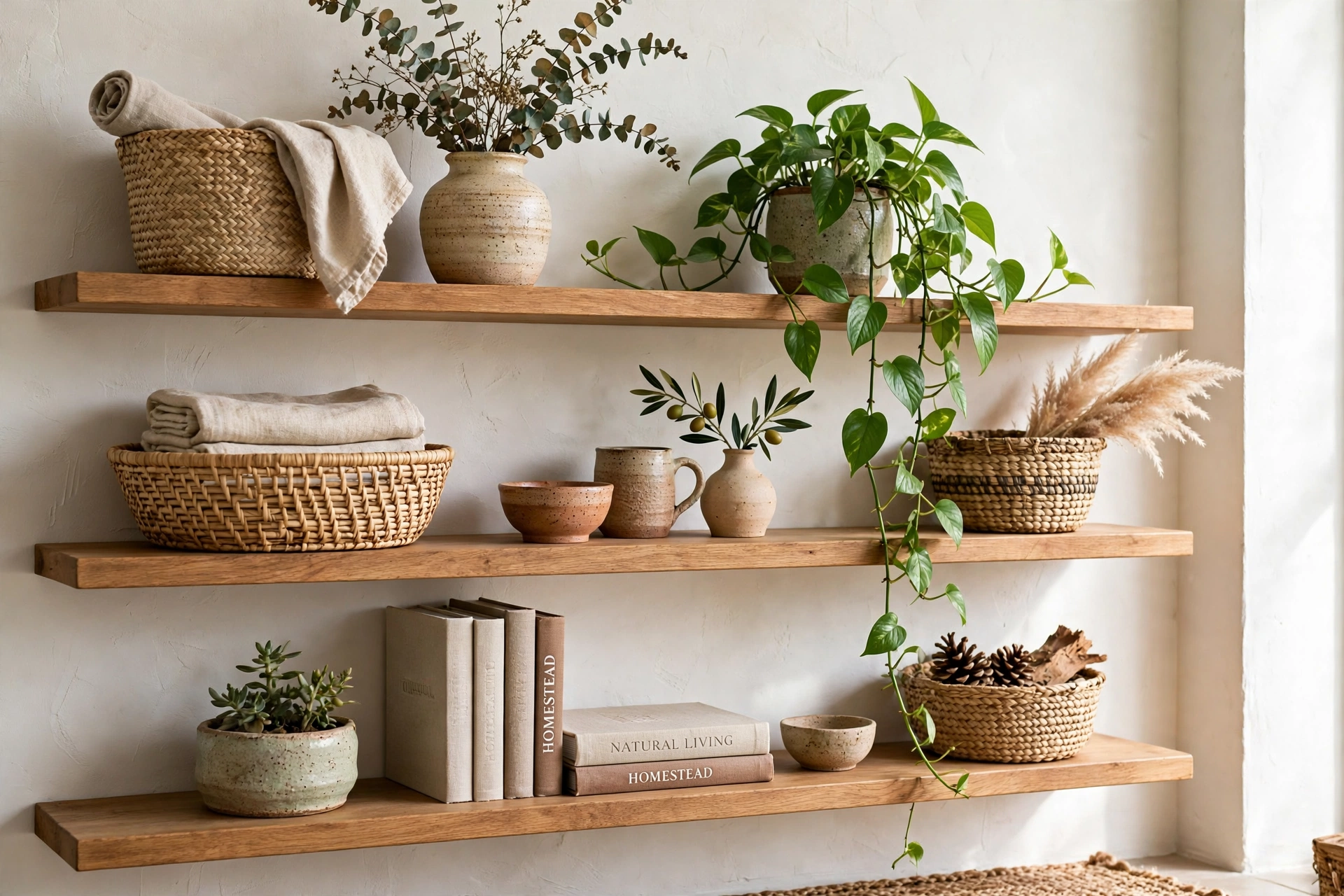
One trailing plant, one piece of leaned art, and one personal object per shelf section supply the texture, movement, and story that plain matching vessels cannot.
Texture contrast does the heavy lifting here. Set a smooth glazed ceramic beside a rough woven basket, then add one metal or glass piece, and the group gains depth without a single new color. Repeat each material two or three times across the whole unit so separate shelves still feel related. A golden pothos on the top shelf trails 1 to 2 feet down the side and softens every hard line below it. Succulents fill the awkward corner gaps where nothing else fits, and dried eucalyptus stems cover high shelves that nobody wants to water.
Leaned art gives a shelf a backdrop. Rest one framed print against the wall at the back, then layer smaller objects in front so the frame peeks out at the edges. Personal pieces deserve the eye-level shelf: a grandmother’s teapot, a bowl bought on a trip, a child’s clay figure. Clustered pillar candles in three heights add warmth on a living room shelf, and unscented wax belongs near books and paper, since fragrance oils can stain pages over time.
Check the Weight Limit Before You Load Up
A shelf is only as strong as its mounting, and a 36-inch floating shelf anchored into studs typically holds 30 to 45 pounds while the same shelf on light drywall anchors may hold less than 15.
Wall studs sit 16 inches apart in most American homes, and a hidden floating-shelf bracket needs at least one rod in a stud to reach its rating. Toggle bolts offer the backup plan: each bolt rates near 50 pounds in half-inch drywall, far beyond the 10 to 20 pounds that simple plastic plugs manage. Manufacturers often rate floating shelves at about 15 pounds per running foot, which puts a 24-inch shelf near 30 pounds total and a 48-inch shelf near 60. Weigh a sample stack of your books and dishes on a bathroom scale, if the shelf will carry more than a few display pieces.
Sag sets the second limit. Particleboard shelves bow visibly over spans past 36 inches under book loads, while solid oak or plywood holds a straight line across 48 inches at the same weight. Keep the heaviest items within a few inches of the wall and close to the brackets, never stacked at the front edge, far from the brackets that carry the load. Shift stoneware, cast iron, and full book rows to the lowest bracket shelf, if the upper shelves ride on drywall anchors alone.
Shelf Decor Room by Room
Each room gives its shelves a different job, and the styling that flatters a quiet living room display will fail on a working kitchen shelf.
Living Room
Display leads and storage follows. Two 36-inch shelves flanking a fireplace hold the classic mix: upright books on one side, a vase trio on the other, one leaned print bridging both. Mount the lowest shelf 8 to 10 inches above a sofa back so heads clear it and the display still connects to the seating. Groups should stay quieter than the television on walls that hold both, since the screen already wins every glance. Picture ledges above the sofa turn the whole wall into a gallery you can restyle in ten minutes.
Kitchen
Function decides placement here. Everyday plates, bowls, and mugs belong on the lowest shelf, about 18 inches above the countertop, where daily washing keeps dust from ever building up. Matching glass jars for flour, rice, and pasta turn dry goods into a uniform display, and a small gap between jars keeps the row from looking like a warehouse shelf. Keep open shelves a few feet from the cooktop, because airborne grease coats anything stored beside the stove. One potted herb and one leaned cutting board soften the working rows without stealing storage space.
Bathroom
Steam rewrites the material rules. Sealed wood, tempered glass, and powder-coated metal survive daily humidity, while unsealed medium-density fiberboard (MDF) swells at the edges and bubbles its finish within a year or two. Narrow shelves 4 to 6 inches deep fit above the toilet without looming over anyone seated below. Rolled white towels, a lidded jar of cotton swabs, and one small plant fill a typical bathroom shelf with spa-hotel calm. Spare bottles and cleaning products belong behind a closed cabinet door, since open shelves punish visual clutter in small rooms.
Bedroom
Calm beats clever in the room where you sleep. A floating shelf can replace a nightstand in a tight bedroom: pick a board 10 to 12 inches deep, mount it level with the top of the mattress, and it holds a lamp, a book, and a water glass. Soft colors and low-contrast groupings keep the display quiet at bedtime. Hang nothing heavier than a canvas print above the pillows, if a shelf runs over the bed at all. Photos, a jewelry tray, and the book you are actually reading cover the personal layer without crowding it.
Home Office
Reach rules the office shelf. Reference books, current files, and the printer paper you grab daily belong within arm’s reach of the chair, roughly at seated eye level or one shelf above it. Matching storage boxes hide cables, chargers, and loose supplies while keeping them grabbable. Set the lowest shelf high enough that you stand up without ducking, about 54 inches from the floor or 20 inches above the desktop. One shelf of pure display, a framed certificate, a plant, a small sculpture, keeps the wall from reading as pure filing.
Light the Display for Half the Effort
Warm under-shelf lighting at 2,700 to 3,000 kelvins (K) makes an ordinary shelf look styled with half the objects, and plug-in light-emitting diode (LED) strips install in about 15 minutes.
Kelvin numbers describe color temperature: 2,700 K glows like a table lamp, while 4,000 K and above turns wood and ceramics cold and gray. Brightness and color accuracy matter too. Pick strips or puck lights with a color rendering index (CRI) of 90 or higher, if you display art, pottery, or anything with red and warm brown tones. A 16-foot adhesive strip roll costs $15 to $25 in 2026 and covers four to five shelves, with the cord hidden along the back edge. Battery puck lights at about $12 for a three-pack spotlight one hero shelf, such as the eye-level section holding your best ceramics, and they ask for fresh batteries every few months.
What Shelf Decor Costs in 2026
A full shelf refresh costs nothing when you shop your own rooms first, and most households land a finished wall of styled shelves between $60 and $450.
Start at zero dollars. Books from a drawer, a serving bowl from the kitchen cabinet, and frames already on other walls restyle a bare bookcase in one afternoon. The under-$60 tier buys two thrifted vases at $5 to $10 each, one golden pothos at about $8, and a three-pack of puck lights. Around $150 covers a pair of solid floating shelves plus plants and candles. The $300 to $450 tier adds a new bookcase in the $150 to $250 range and leaves room for ceramics, baskets, and art prints at $12 to $30 apiece. Spend in a fixed order: shelf first, mounting hardware second, two or three anchor pieces third, and small fillers last, since fillers are where budgets quietly leak away on pieces nobody notices.
FAQs
How much weight can a floating shelf hold?
Most 24 to 36 inch floating shelves hold 30 to 45 pounds when bracket rods hit wall studs. Capacity drops under 15 pounds on drywall anchors, so match the mounting hardware to the load first.
How far apart should shelves be spaced vertically?
Leave 12 to 15 inches between shelves for books and dishes. Small decor fits an 8 to 12 inch gap, while tall vases and trailing plants need 18 to 24 inches of clear height above the shelf surface.
How many items should sit on one shelf?
Plan on two groups per standard 36-inch shelf, with three to five pieces in each group. That count leaves about a quarter of the surface empty, which keeps a display from reading as storage.
What is the rule of three in shelf styling?
Group three objects of different heights, such as a tall vase, a medium stack of books, and a low bowl. Odd groups look collected rather than lined up, and the eye travels across all three points.
How deep should a shelf be for books?
Ten to 12 inches of depth fits most hardcovers with their spines flush or slightly recessed. Paperbacks sit comfortably on 8-inch shelves, while oversize art books need the full 12 inches plus room for a bookend.
Is it safe to hang a shelf above a bed?
Yes, with strict limits on weight and hardware. Mount the shelf into studs, keep only light pieces such as canvas art and paperbacks up there, and never place ceramics, stone, or glass over the pillows.
How do you style shelves in a rental without drilling?
Lean art instead of hanging it, and choose bookcases or ladder shelves that stand on the floor. Adhesive picture ledges rated for frames under five pounds cover small walls without a single hole.
Conclusion
Start with one shelf, live with the arrangement for a week, and adjust only the groups that still bother you. Small passes beat one long decorating afternoon, because your eye spots problems in daily life that it misses during setup. A 36-inch floating shelf anchored into two studs carries 30 to 45 pounds without sagging.