Shopping for modern teenage girl bedroom ideas usually starts with photos and ends with a furniture delivery that doesn’t fit. Measurements, budget order, and lighting numbers decide whether a room works after the photos fade. Spend ten minutes with a tape measure before spending one dollar on decor.
What Do Modern Teenage Girl Bedroom Ideas Need to Cover in 2026?
A 2026 teen bedroom plan has to cover five jobs at once: sleep, homework, getting ready, storage, and time with friends.
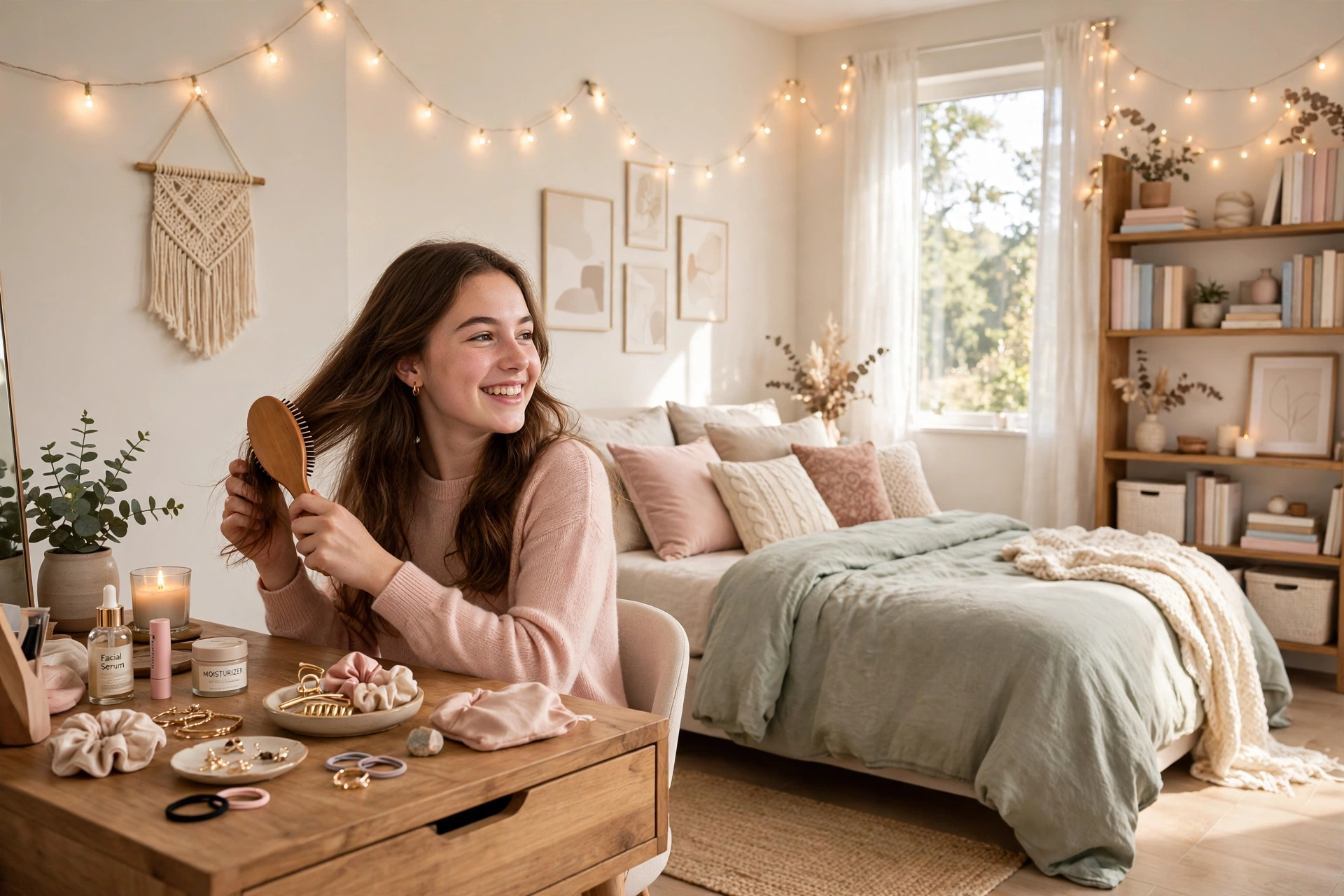
Most rooms fail on one job, usually storage, and the failure shows up as piles on the floor within a month. The strongest modern teenage girl bedroom ideas treat the room as a small studio apartment, not as a decorated child’s bedroom. Start by listing her actual routines on paper. A typical weekday includes 2 hours of homework, 30 minutes of getting ready, and screen time that stretches past 10 p.m. Routines decide the furniture list, and the furniture list decides the budget. Style comes after function, because a beautiful desk in the wrong corner collects laundry instead of notebooks. Parents who plan zones first report fewer mid-project changes, and fewer changes keep a $500 refresh from turning into a $1,200 rebuild. Every section below answers one job with sizes, prices, or product types you can check in a store.
Which Color Palette Works Best for a Modern Teen Girl Bedroom?
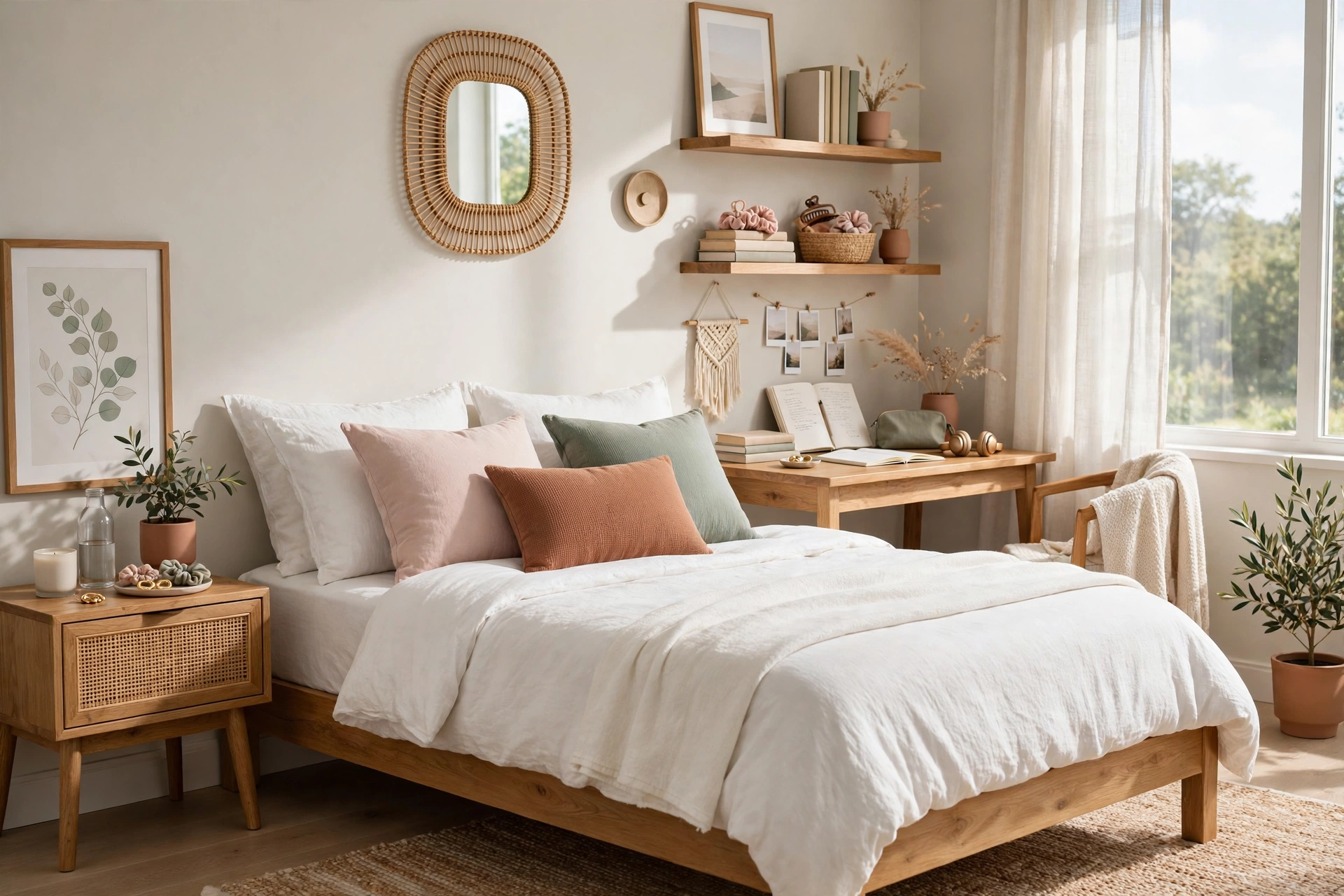
Dusty rose paired with warm white works best for most teen girls because the pairing reads grown-up at 13 and still fits at 18.
Paint covers every wall, so color sets the mood before a single pillow lands on the bed. Sherwin-Williams Intimate White SW 6322 gives walls a soft warmth that keeps blush bedding from looking sugary. Sage green with greige suits teens who want a calm room, and the pairing hides scuffs better than bright white. Charcoal belongs on one wall only, behind the bed, where the dark tone makes light bedding look crisp. The 60-30-10 rule keeps the mix under control: 60 percent main color, 30 percent secondary color, 10 percent accent color. Bedding carries the accent share in most rooms, for example rust-orange cushions on a cream duvet. Test two sample pots on the wall and check the dried color at breakfast and again under lamplight. North-facing rooms cool every paint color, so pick a shade one step warmer than the swatch you love.
How Should You Zone a 10 by 12 Foot Room?
Put the bed on the longest wall, the desk under the window, and tall storage on the wall between them.
A standard teen bedroom measures 10 by 12 feet (3.05 by 3.66 meters), and that rectangle holds five zones without crowding. Sleep takes the quiet corner away from the door, where hallway noise drops after 9 p.m. Homework belongs near daylight, since a desk under a window cuts lamp use during afternoon study sessions. Leave a 30 inch (76 centimeter) walkway between the bed and the dresser so drawers open fully. Floor plans drawn to scale catch mistakes early; graph paper at one square per 6 inches costs under $5. Many modern teenage girl bedroom ideas skip this measuring step, and the skipped step explains most returned furniture. Charging fits beside the bed, not at the desk, because phones charge overnight and alarms need to sit within arm’s reach.
Which Bed and Headboard Anchor the Room?
An upholstered headboard anchors the room because the bed occupies roughly one third of the floor in a 10 by 12 foot bedroom.
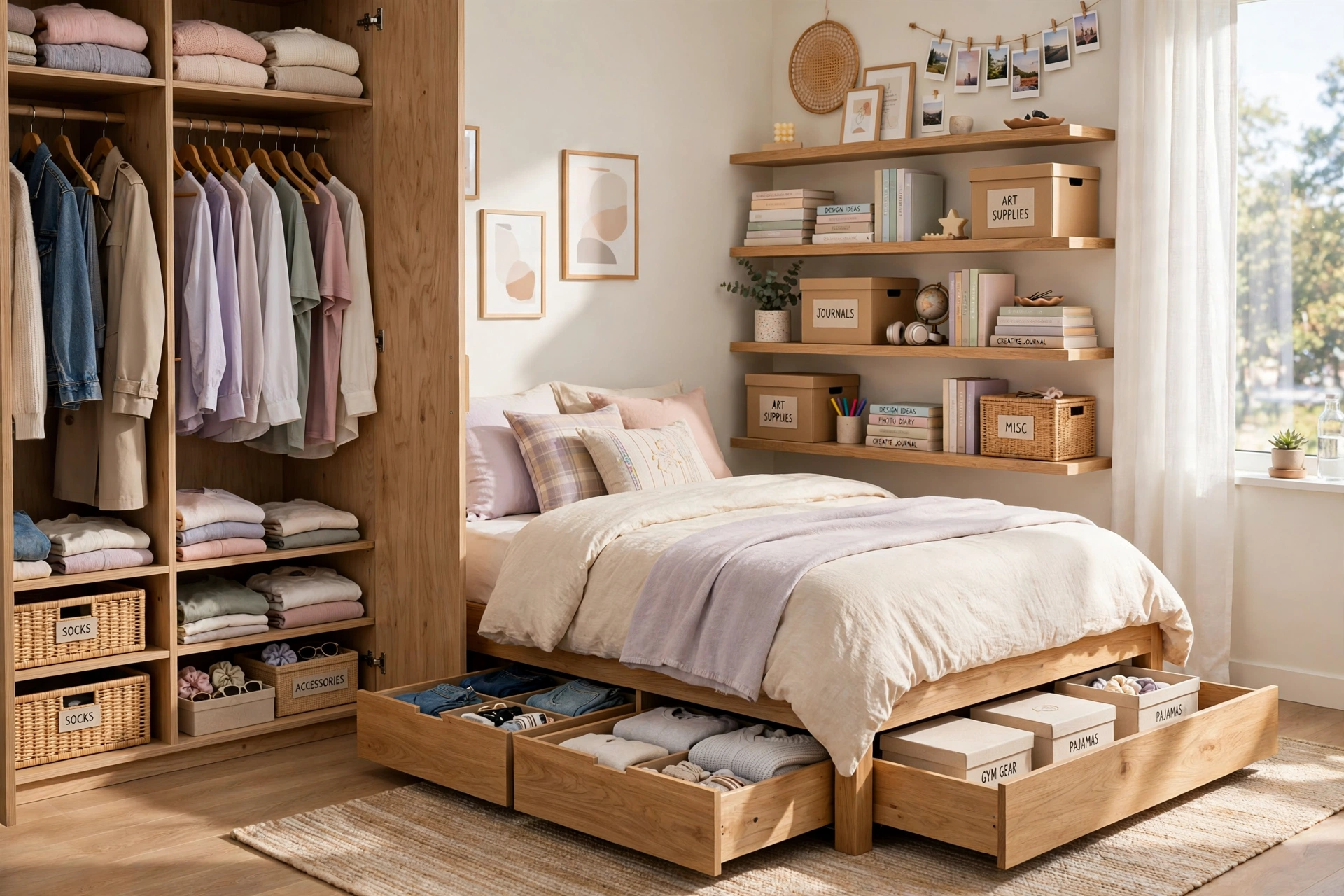
Channel tufting in performance velvet survives hair products and snack accidents better than raw linen. Platform frames don’t need a box spring, and the lower profile suits rooms with ceilings under 8 feet. Under the mattress, 7 inches of clearance fits rolling bins for off-season clothes and extra blankets. Daybeds seat three friends during the day and sleep one guest at night, which makes a daybed the smarter pick for sleepover-heavy households. Trundle drawers hide the guest mattress completely, so the floor stays clear for getting ready. Layered bedding sells the finished look: fitted sheet, duvet, a folded quilt at the foot, then pillows in three sizes. Twin XL bedding (38 by 80 inches) doubles as dorm bedding later, and buying twin XL sheets now prevents a second purchase at graduation.
How Much Storage Does a Teen Bedroom Need?
Plan storage around five categories: school clothes, off-season clothes, books, beauty products, and hobby gear.
Each category needs a fixed home, or items drift to the desk chair by Friday. Under-bed space alone gives back about 14 cubic feet in a twin setup, the same volume as a medium dresser. Standard pieces cover the five categories at predictable sizes and prices:
| Storage Piece | Holds | Typical Size | Typical Price |
|---|---|---|---|
| Under-bed rolling bins | Off-season clothes, extra bedding | 41 quart, 6.5 in high | $12 to $20 each |
| Cube organizer, 6 cubes | Books, baskets, hobby gear | 36 x 36 x 12 in | $45 to $70 |
| Floating shelves, set of 3 | Books, plants, framed photos | 36 in long, 6 in deep | $25 to $40 |
| Over-door organizer | Shoes, accessories, chargers | 24 pockets, 64 in long | $15 to $25 |
| Storage ottoman | Throws, guest bedding | 30 x 15 x 15 in | $40 to $65 |
| Drawer dresser, 6 drawers | School clothes | 48 x 32 x 18 in | $180 to $300 |
Vertical space beats floor space in small rooms, so shelves should climb to within 12 inches of the ceiling. Anchor every unit taller than 30 inches to a wall stud, since a loaded bookcase tips faster than parents expect. Baskets inside open cubes hide the visual mess, and lids keep dust off stored items between uses. Guides to modern teenage girl bedroom ideas rarely print capacities, yet capacity decides whether a room stays tidy in October and in May.
What Desk and Vanity Setup Handles Homework and Getting Ready?
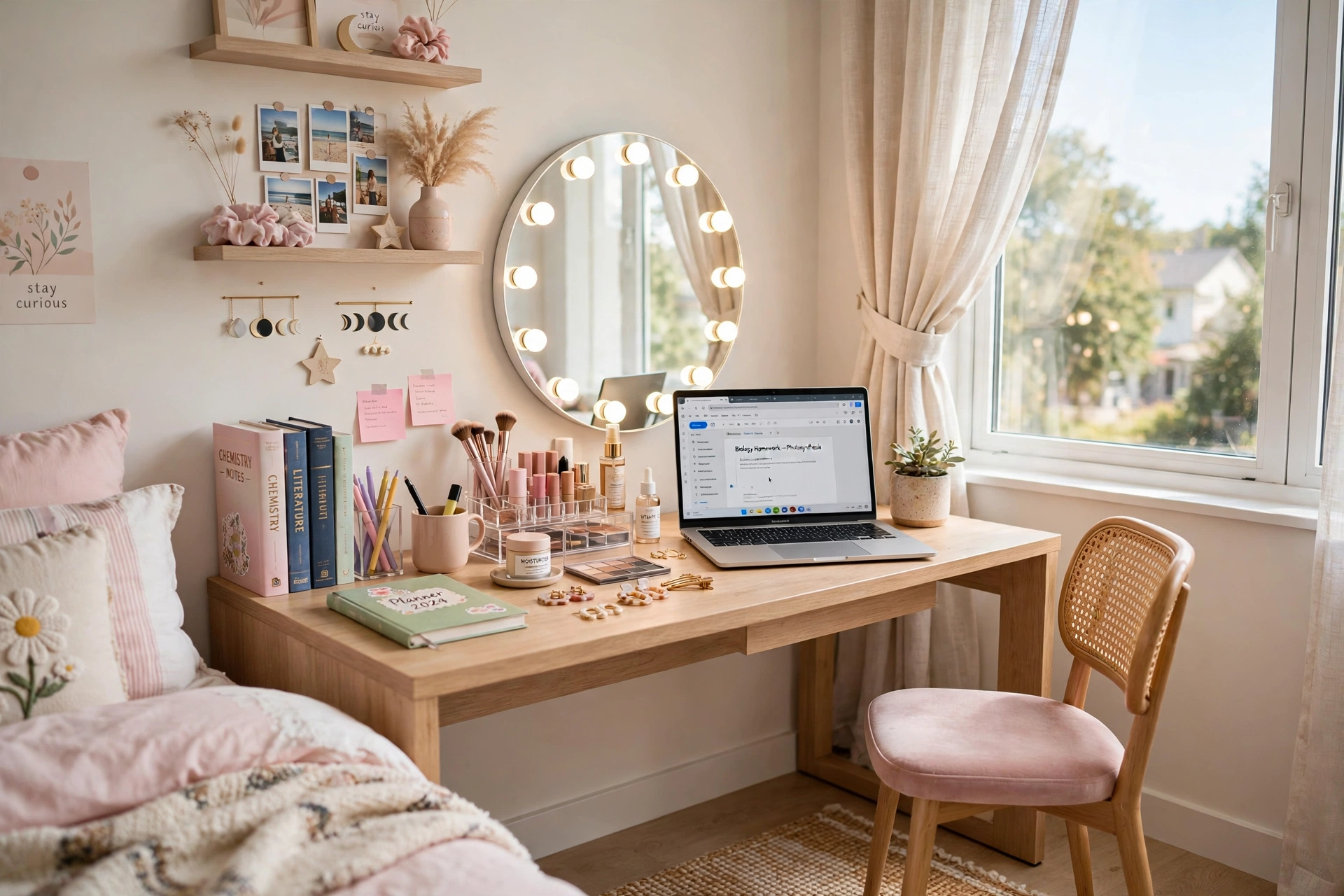
A 48 inch desk with one drawer unit handles both jobs: homework across the left half, beauty supplies inside the right-hand drawers.
Desk height matters more than desk style; a surface at 29 to 30 inches keeps shoulders level during long assignments. Chairs decide comfort, and a seat height of 17 to 19 inches with lumbar support beats a decorative stool after 45 minutes. Acrylic trays corral makeup on the desk corner, while a small mirror on a stand converts the corner into a vanity in seconds. Cable trays under the desk hide chargers and power strips, keeping the floor clear for a backpack drop zone. Pegboards above the desk hold headphones, scissors, and chargers at eye level, and the board costs about $20 at most hardware stores. Natural light flatters makeup practice, so face the mirror toward the window rather than toward a wall. Storage inside the desk beats storage beside the desk, because every item within arm’s reach gets put back.
How Do You Layer Lighting for Study Time and Sleep?
Three layers do the work: one ceiling fixture for general light, one desk lamp for homework, and warm accent lights for the evening.
A single overhead bulb flattens the room and strains eyes during reading, no matter how bright the bulb claims to be. Bulb packaging prints color temperature in Kelvin, and 2700K to 3000K reads warm and restful for bedrooms. For homework, pick a desk lamp at 3500K to 4000K with an adjustable arm. Light-emitting diode (LED) strips along a shelf edge add glow without heat, and a 16 foot roll costs $10 to $15. Fairy lights belong on the headboard or a shelf, never draped over curtains or bedding, even when product photos show fabric contact. Dimmers on the main switch let one fixture serve both morning routines and evening wind-down. Blackout curtains block 85 to 100 percent of incoming light, and darker sleep improves next-day focus at school.
Which Wall Decor Adds Personality Without a Repaint Every Year?
Peel-and-stick wallpaper on the wall behind the bed adds the strongest personality for the smallest commitment.
One roll covers about 28 square feet and costs $30 to $60, and the material peels off without paint damage in most rentals. Gallery walls cost less and change faster; eight thrifted frames rarely cost more than $25 total. Matching frame finishes unify mixed art, so spray-paint odd frames in one color before hanging anything. Damage-free adhesive strips hold 4 to 16 pounds per set, which covers canvas art and light mirrors but not heavy glass frames. Picture ledges beat single nails for teen art, because prints swap in minutes when tastes change and walls won’t collect rows of holes. Do-it-yourself (DIY) projects fill blank space cheaply: a painted arch behind the desk needs one quart of paint and painter’s tape. Leave one wall plain in every scheme, since a rest wall keeps bold patterns from overwhelming a small room.
What Should You Buy First on a $150, $500, or $1,500 Budget?
Paint and bedding come first at every budget level because those two purchases cover the walls and the largest furniture piece in the room.
At $150, buy one gallon of paint ($35 to $55), a duvet cover set ($40 to $60), and two pillow shams, then rearrange the existing furniture for free. Five hundred dollars adds a proper desk chair ($120 to $180), a set of floating shelves, and LED strip lights for the headboard. Rooms feel finished at the $500 tier, even though no large furniture has changed. Fifteen hundred dollars replaces the headboard with an upholstered model ($250 to $400) and adds a 48 inch desk plus a drawer dresser. Spend on the mattress and chair before decor at the top tier, because both items get used for 8 or more hours a day. The best modern teenage girl bedroom ideas respect this order, since visible style upgrades photograph well yet daily comfort decides whether she loves the room. Secondhand dressers and nightstands cut the $1,500 tier by a third, and solid wood pieces repaint cleanly.
FAQs
What Size Rug Fits a 10 by 12 Foot Teen Bedroom?
A 5 by 7 foot rug fits under the lower two thirds of the bed, while an 8 by 10 foot rug covers the bed, nightstand, and desk chair zone. Choose the larger size for hardwood floors.
Can a Teen Bedroom Work Without a Separate Vanity?
Yes, a desk corner with a stand mirror and one acrylic tray handles makeup and hair tools without extra furniture. Reserve a full vanity for rooms wider than 12 feet.
Which Colors Make a Small Teen Bedroom Look Bigger?
Warm white walls with one pale accent color reflect the most light and stretch the visual size of the room. Dark colors still work on the bed wall, behind light bedding.
How Long Does Peel-and-Stick Wallpaper Last?
Quality peel-and-stick wallpaper lasts 3 to 5 years on smooth, clean walls before edges start to lift. Humidity from an attached bathroom shortens the lifespan, so vent the room after showers.
What Desk Size Fits a Laptop and Homework?
A 48 inch wide, 24 inch deep desk holds a laptop, an open textbook, and a lamp at the same time. Desks under 40 inches force students to stack books on the bed.
Is a Daybed or a Regular Bed Better for Sleepovers?
A daybed with a trundle wins for sleepovers because the guest mattress hides under the frame during the day. Regular beds suit teens who rarely host and prefer a wider sleep surface nightly.
How Often Should a Teen Bedroom Be Updated?
Small updates every 12 to 18 months keep the room current without a full redesign. Swap bedding, art, and one accent color first, since furniture and paint carry a room for 5 years.
Conclusion
Modern layouts succeed when zones, sizes, and light come before color and decor.
Start with the floor plan, buy in budget order, and let her pick the accent pieces that carry personality. Most rooms need one weekend for paint and one afternoon for furniture placement. The standard twin mattress measures 38 by 75 inches, and every layout in this guide starts from that fixed footprint.