

What Makes a Guest Bedroom Feel Welcoming?
A welcoming guest bedroom gives visitors a comfortable bed, clear space for their belongings, control over light and temperature, and supplies placed where guests find them without asking. Guests form a verdict within the first two minutes inside the door. Fresh sheets, an empty patch of nightstand, and a folded towel answer their first questions silently. Hosts who copy hotel habits get the basics right every single time.
Comfort starts with sleep, and sleep starts with the bed itself. Most guest bedroom ideas fail at that exact point, because the room looks styled yet sleeps badly. A mattress that sags in the middle undoes every decorative choice around it. Fix the sleep surface first, then spend on the parts guests can see.
Three questions run through a guest’s mind on arrival. Where does the suitcase go, where does the phone charge, and where is a glass of water? Answer all three before your visitor walks in, and the room feels considered rather than spare. Small rooms pass the same test, if every answer stays within arm’s reach of the bed. Practical guest bedroom ideas respect the host’s calendar too, because a room that takes an hour to reset will quietly stop getting reset.
Which Bed Size Suits a Guest Bedroom?
A queen bed is the safest default choice, if the room measures at least 10 feet by 10 feet (3 by 3 meters). Queen mattresses measure 60 inches wide by 80 inches long (152 by 203 centimeters), and two adults sleep on one without negotiation. Couples make up the most common guest pairing in most homes. Hosts with a smaller footprint still have workable options below.
Queen Bed for Couples
Floor space decides whether a queen works. Leave at least 24 inches (61 centimeters) of walking room on both sides of the frame. Tight clearance on one side forces the second sleeper to climb over the first, which guests remember. A low-profile frame keeps the bed height near 24 inches (61 centimeters) from the floor, a comfortable range for older visitors who sit down to dress.
Twin Beds and Trundles for Flexible Stays
Twin beds suit siblings, friends and children who prefer separate sleeping space. Each twin measures 38 inches by 75 inches (97 by 191 centimeters), and a shared nightstand between the pair holds one lamp, two phones and a water glass. Trundle frames hide a second mattress under the first, so a single room sleeps two without a permanent second bed. Families with young cousins visiting twice a year get the most from this setup.
Daybeds and Sofa Beds for Dual-Use Rooms
A daybed or sofa bed earns its place, if the room works as an office or study between visits. Daybeds take a standard twin mattress, and the back cushions turn the frame into daytime seating. Pull-out sofa beds fold flatter for storage, though the thinner mattress pads out better with a 2-inch (5 centimeter) topper. One homeowner in Austin, Texas runs her 9 by 11 foot (2.7 by 3.4 meter) spare room as a weekday office and a weekend guest room with one daybed and a rolling desk.
How Should You Layer Bedding for Guests?
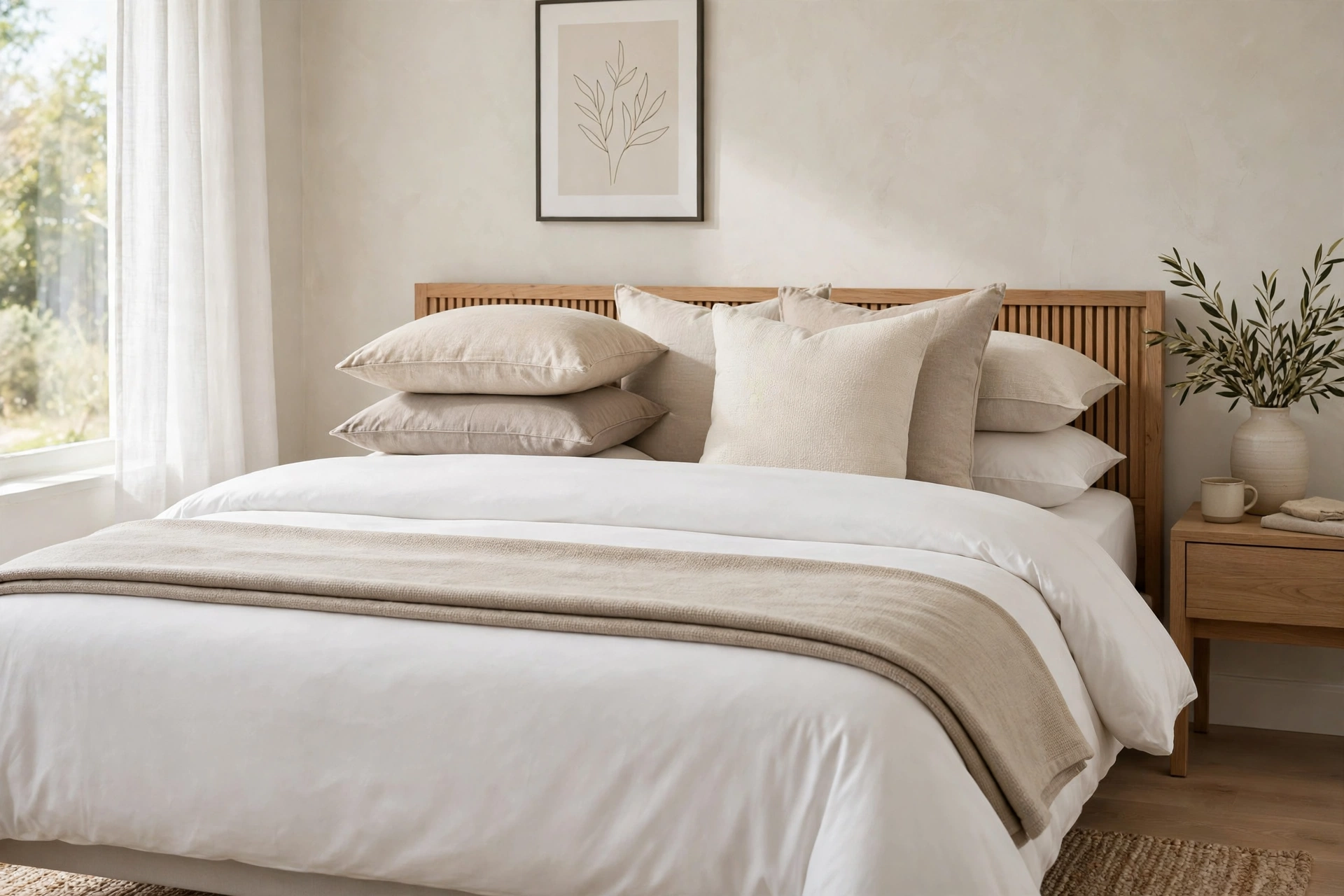
Layered bedding lets each guest adjust warmth through the night without waking the host. A flat sheet, a mid-weight duvet and a folded throw at the foot of the bed cover most sleepers in most seasons. People run at different temperatures, sometimes by several degrees inside one bed. Removable layers solve the mismatch quietly.
Sheets and the Mattress Topper
Cotton percale sheets with a thread count between 300 and 400 feel crisp, breathe well and wash without fuss. Percale weave gives a matte, cool surface that suits warm sleepers. Sateen feels smoother and warmer, which suits guests who run cold. A mattress topper adds the comfort an older guest mattress lacks, and 2 to 3 inches (5 to 8 centimeters) of foam or feather blend changes a firm, tired mattress into a forgiving one. White sheet sets simplify laundry, because one bleach-safe load handles the whole guest linen stock.
Pillows and Warmth Layers
Two sleeping pillows per guest, one firm and one soft, cover nearly every pillow preference. Reading guests prop the firm pillow behind their back against the headboard. Stomach sleepers flatten the soft one and ignore the other. Keep one extra blanket inside a basket or on a luggage bench, since a cold guest rarely knocks on the host’s door at 2 a.m. Hypoallergenic pillow protectors guard guests with dust allergies, and the protectors zip off for washing between stays.
What Does a Guest Bedroom Need at Each Budget?
A functional guest bedroom costs under $150 to refresh, $150 to $600 to furnish properly, or $600 and up to finish to hotel standard. Money goes furthest on the items guests touch: bedding, towels and light. Decorative objects come last in every tier. The table below splits a typical spend across the three levels, using United States retail prices from 2026.
| Item | Refresh: under $150 | Furnish: $150 to $600 | Hotel standard: $600 and up |
|---|---|---|---|
| Bedding | White cotton sheet set, $35 | Percale set plus duvet and cover, $120 | Percale set, duvet, quilt and throw, $220 |
| Sleep surface | Mattress protector, $20 | 2-inch foam topper, $80 | 3-inch topper or new mattress, $300 and up |
| Lighting | One bedside lamp, $30 | Matching lamp pair with 2700K bulbs, $90 | Lamps plus dimmable wall sconces, $180 |
| Guest storage | Folding luggage rack, $25 | Luggage rack plus dresser drawer set, $110 | Bench, dresser and cleared closet rail, $200 |
| Towels and extras | Two bath towels, $25 | Towel set plus toiletries basket, $60 | Towel set, carafe, flowers and snack basket, $90 |
Guests rarely notice which tier a room sits in. People notice cold feet, a dead phone battery and a missing towel within the first hour. Spend on those failure points first, and the decor budget stretches further than expected. Weekend hosts who host six times a year recover a mid-range spend quickly, because each stay feels deliberate instead of improvised.
Which Colors Work Best in a Guest Bedroom?
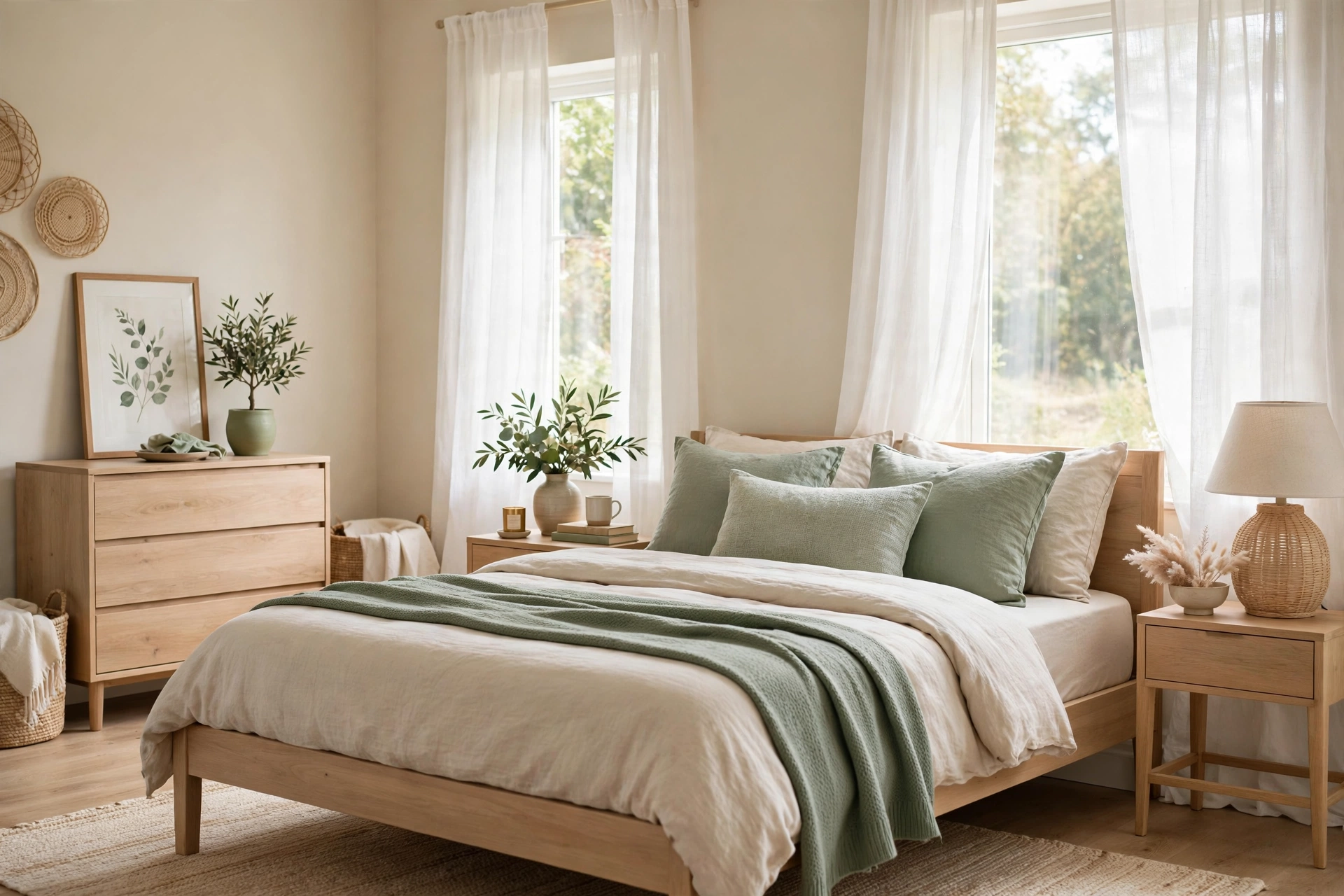
Calm, light colors suit a guest bedroom best, because unfamiliar rooms read as restful when the palette stays quiet. Warm white walls, beige textiles and one muted accent color please the widest range of visitors. Think of a palette in thirds: roughly 60 percent one light base, 30 percent a soft secondary tone and 10 percent a deeper accent. Sage green cushions on a warm white bed hit that ratio without effort.
Bold color still has a place, handled with restraint. Navy or forest green on a single wall behind the headboard adds depth, and the remaining walls stay light so the room never feels closed in. Mauve and terracotta warm up north-facing rooms that receive cool daylight. Guests with visual sensitivities rest better in low-contrast schemes, so save high-contrast patterns for one cushion or a single framed print. Paint sheen matters too: eggshell finishes hide minor wall flaws under lamplight far better than flat paint does under the same bulb.
How Should Lighting Work in a Guest Bedroom?
A guest bedroom needs three light levels: overhead light for arrival, bedside light for reading, and a low night light for safe trips to the bathroom. Strangers cannot find switches in the dark, so every control should sit within reach of the bed or the door. Warm bulbs near 2700 kelvin (K) flatter skin and signal rest. Cool daylight bulbs above 4000 K belong in kitchens and offices, not beside a pillow.
Bedside lamps deserve first priority in the lighting budget. Matching lamps on both sides stop one guest’s reading light from glaring across the other sleeper’s face, if the shades sit at shoulder height when a person sits up in bed. Plug-in wall sconces free nightstand space in narrow rooms. Blackout curtains or lined shades protect sleep past sunrise, and a small motion-sensor night light in the hallway guides guests without waking the household. Modern LED (light-emitting diode) bulbs use about 75 percent less energy than incandescent bulbs of equal brightness, so leaving a hallway light on overnight costs very little.
What Temperature and Sound Help Guests Sleep?
Bedrooms sleep best between 65 and 68 degrees Fahrenheit (18 to 20 degrees Celsius), with steady background sound covering household noise. Guests cannot adjust an unfamiliar heating system in the dark, so set the thermostat before arrival and leave one spare blanket in sight. A small fan does double duty in summer rooms: moving air cools skin, and the motor hum evens out street sounds. White noise machines cost about $30 and remember the last setting between stays. Heavy curtains block sunrise light, and thick fabric muffles early traffic at the same time. One Chicago host programs a smart plug to start a fan at 10 p.m., so guests never hunt for a switch in an unknown room. Sound and temperature belong on the design list, because strong guest bedroom ideas treat sleep conditions as features, not afterthoughts.
What Storage Does a Guest Room Need?
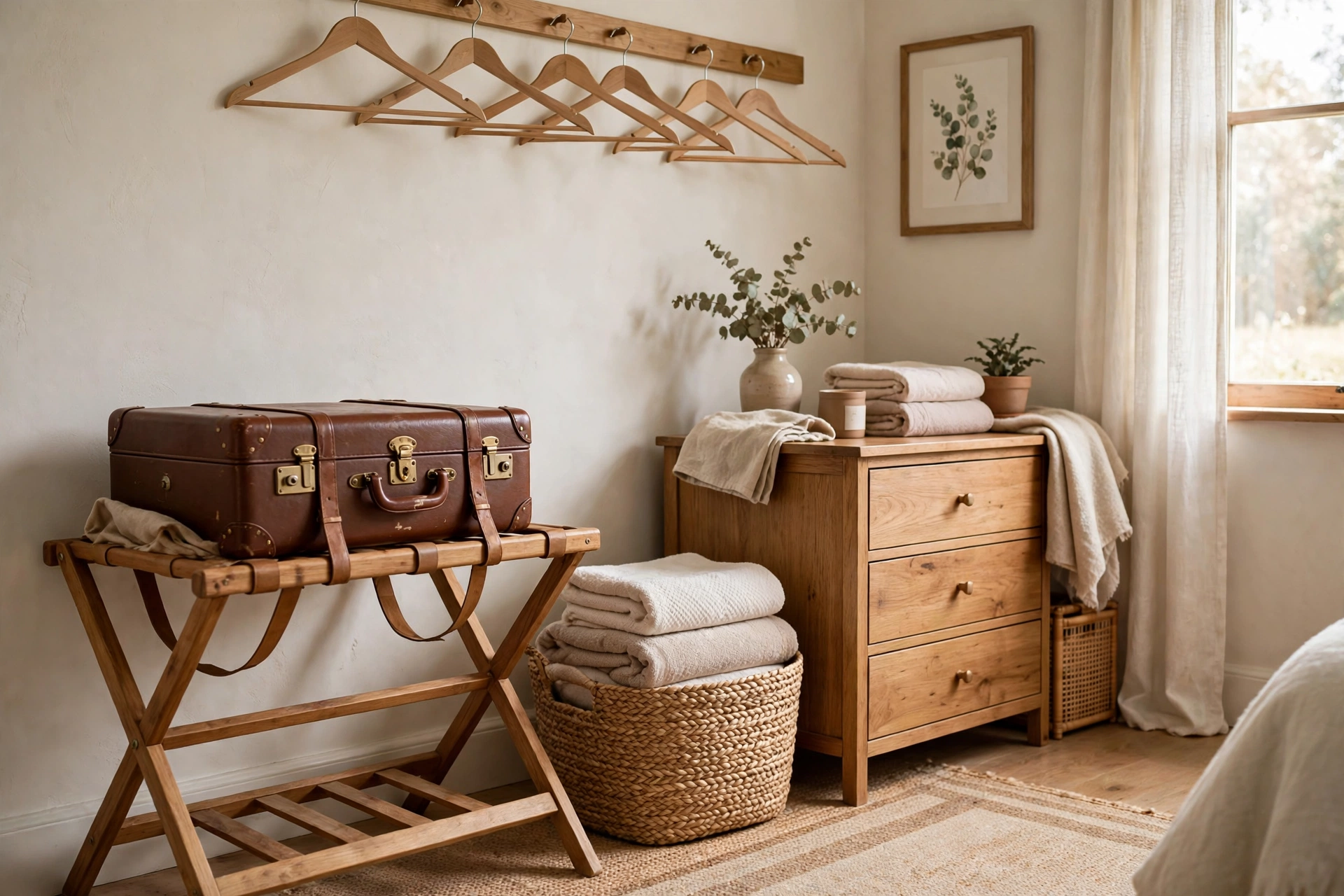
Guests need four storage points: a luggage surface, two empty drawers, one meter of hanging rail, and a clear nightstand. Suitcases left on the floor make visitors feel like intruders in storage space. A folding luggage rack, priced near $25, holds a carry-on measuring 22 by 14 inches (56 by 36 centimeters) and folds flat between visits. Hosts without a rack can clear the top of a low dresser instead.
Closet space needs honesty more than size. Push your own stored coats to one end and leave six empty hangers visible, because an obviously cleared rail tells guests their clothes belong there. Drawers should open empty, not half filled with your winter scarves. Hooks on the back of the door catch towels, dressing gowns and handbags. One tray on the dresser collects keys, watches and loose change, keeping small items off the floor and out of the bed.
How Do You Fit Guest Bedroom Ideas Into a Small Room?
Small guest rooms work when the bed shrinks to a full size, furniture goes vertical, and every piece earns its footprint twice. A full bed measures 54 inches by 75 inches (137 by 191 centimeters) and sleeps two adults while freeing 6 inches (15 centimeters) of width against a queen. Wall-mounted shelves replace a second nightstand. Mirrors above the dresser bounce lamplight and make an 8 by 10 foot (2.4 by 3 meter) room feel wider than its tape measure says.
Dual-duty pieces carry the whole scheme in a tight footprint. Storage ottomans hold spare blankets and give guests a seat for pulling on shoes. Nesting side tables slide apart for drinks and stack away after checkout. Pale bedding keeps the visual weight low, and one patterned cushion supplies enough character for the whole bed. Fold-down desks mounted at 30 inches (76 centimeters) give working guests a laptop surface, then disappear against the wall before bedtime. Vertical stripes on one curtain panel draw the eye upward, which stretches a low ceiling in the visitor’s perception.
Which Finishing Touches Make Guests Feel Cared For?
Guests feel cared for when the room anticipates small needs: water, light, information and privacy. A carafe and glass on the nightstand end the midnight search for the kitchen. Framed Wi-Fi (wireless fidelity) details on the dresser spare everyone the password conversation at the door. Fresh flowers cost little at a grocery store, yet a small vase on the nightstand signals the stay was planned, not tolerated.
Bathroom supplies carry equal weight in the guest’s judgement. Two bath towels, two hand towels and two washcloths per guest form the standard hotel count, laid on the bed or a clean shelf. A basket with travel shampoo, conditioner, body wash, toothpaste and a sealed spare toothbrush rescues the guest who forgot a wash bag. Universal Serial Bus (USB) charging cables in the nightstand drawer handle forgotten chargers, and a small trash can with a liner saves guests from hiding tissues in their suitcase. Lock the bedroom door from the inside, if a privacy latch exists, and mention the latch during the tour of the room.
Scents deserve a light hand in a room built for strangers. Skip plug-in fragrances and scented candles before arrival, since artificial scents trigger headaches in some visitors. Open the window for twenty minutes instead, and let fresh air do the work. A small plant on the dresser, a pothos or a snake plant, adds life without perfume. Cleanliness carries the scent message on its own: a room that smells of nothing reads as a room cleaned that same day.
Frequently Asked Questions
What size bed is best for a guest bedroom?
A queen bed suits most guest bedrooms because two adults sleep comfortably on 60 by 80 inches. Full beds fit rooms under 100 square feet, and twin pairs suit siblings or friends who prefer separate beds.
How can I make a guest bedroom comfortable on a budget?
Start with white cotton sheets, a washed duvet and one extra blanket. Add a $25 luggage rack, two fresh towels per guest and a bedside lamp. Those five items fix the failures guests notice first.
What should be on a guest bedroom nightstand?
Place a lamp, a water glass or carafe, a phone charging cable and a small clock on the nightstand. Leave half the surface empty so guests can set down glasses, books and medication.
Which colors make a guest bedroom feel relaxing?
Warm white, soft beige and pale gray create the calmest base for guest sleep. Add one muted accent such as sage green, dusty blue or terracotta in cushions and a throw for warmth.
How many pillows should a guest bed have?
Provide two sleeping pillows per guest, one firm and one soft, because pillow preference varies more than any other bedding choice. Add one decorative cushion at most, since guests must move cushions before sleep.
Do guests prefer blackout curtains?
Yes, most guests sleep longer behind blackout curtains or lined shades. Unfamiliar rooms let in light at unfamiliar angles, and darkness removes one common cause of early waking during a stay.
How do I prepare a guest room the night before?
Run a 30-minute reset: wash and remake the bed, lay out towels, empty the trash can, clear one drawer and the luggage surface, then set water and a charging cable by the bed.
Conclusion
A spare room becomes a real guest bedroom through decisions about sleep, storage, light and small courtesies, taken in that order. Budget size changes the finishes, never the sequence. Hosts who fix the bed first, clear space second and decorate third end up with rooms that visitors request again. Strong guest bedroom ideas share one trait: each one answers a need the guest has not yet voiced. The next guest who stays at your home will sleep on a bed made up with fresh cotton sheets, two pillows and one folded throw.