Girls Bedroom Ideas That Grow With Her
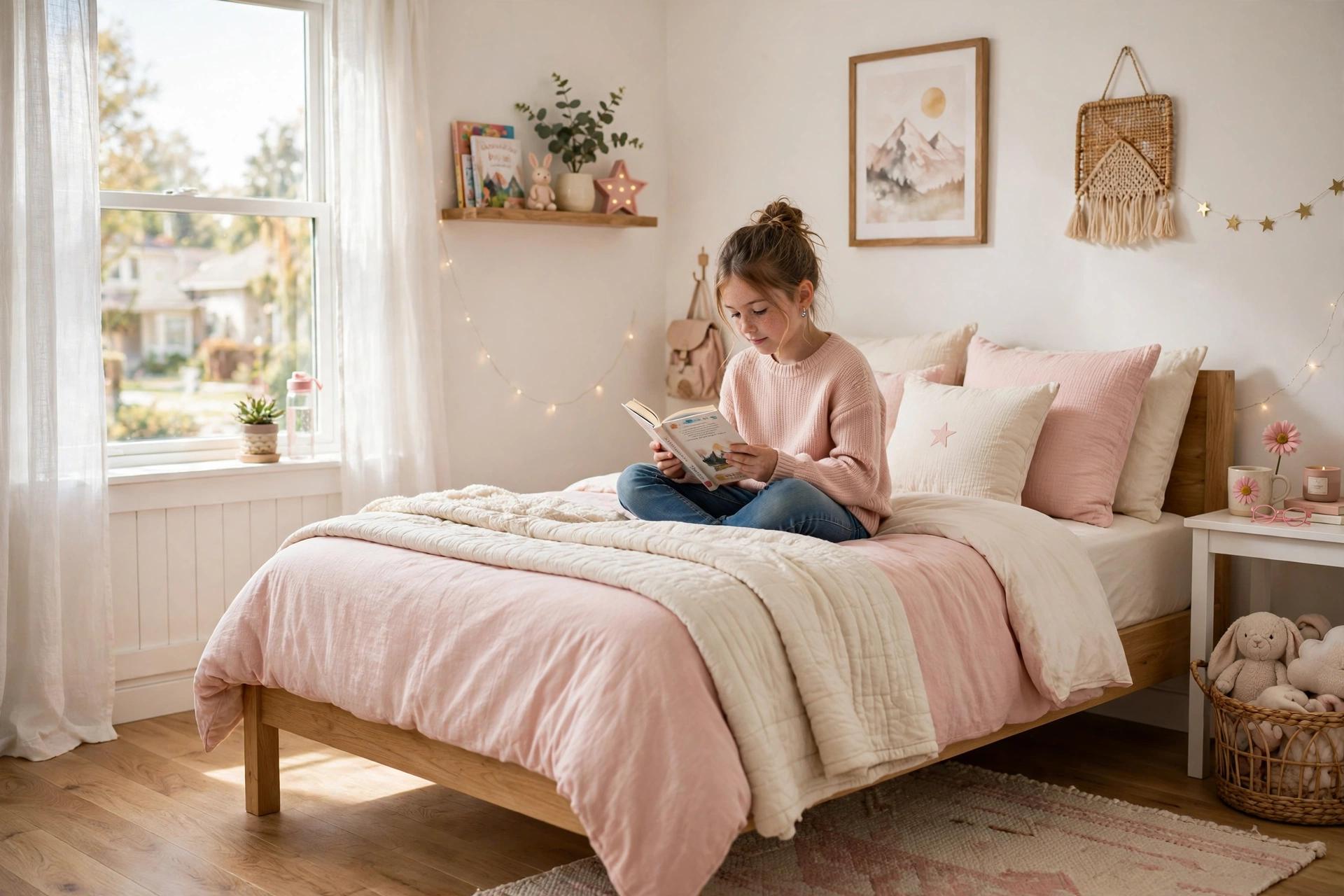
The best girls bedroom ideas pair a neutral, full-size foundation with personality pieces that swap in under one hour, and that structure carries a room from the toddler years to the teen years without a second full makeover. Parents usually decorate for the girl standing in front of them. A four-year-old who wants unicorns at breakfast often wants a desk, a mirror, and total privacy by age eleven. Rooms built around one character theme rarely survive that shift. Paint, bedding, and accessories carry the theme instead, and each of those layers costs under $150 to replace. Furniture, storage, and lighting stay neutral underneath, so the expensive parts never need a second purchase. Designers call the approach layering, and the method works in a 9 by 10 foot (2.7 by 3 meter) room as well as in a large primary suite conversion.
Choose a Color Palette That Ages Well
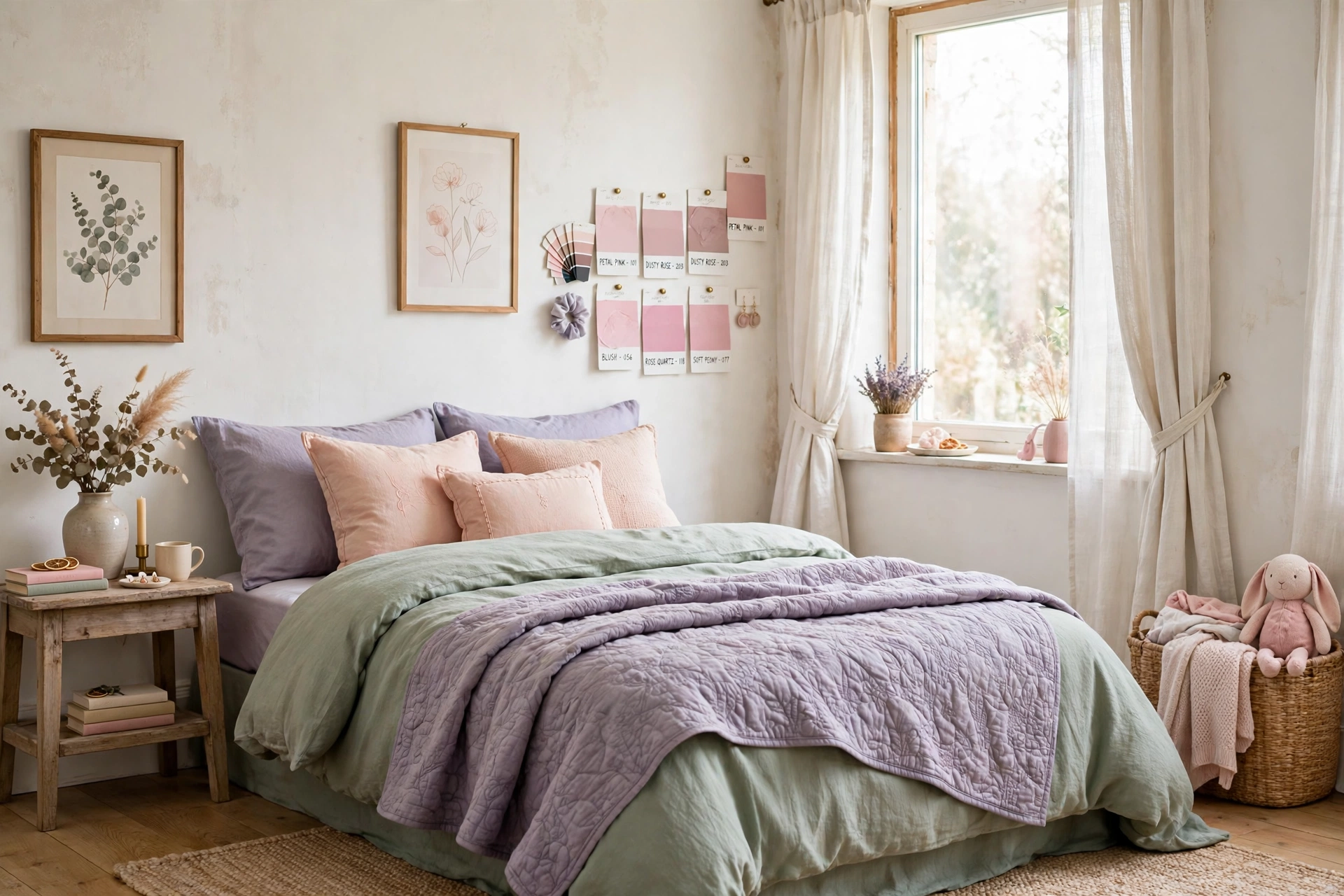
A softened version of her favorite color, spread across walls, bedding, and one accent layer, gives a girls bedroom a palette that stays pleasant for a decade. Hot pink walls photograph well. Rooms feel smaller and louder under saturated color, though, and repainting four walls costs a full weekend plus roughly $60 in paint. Blush pink, dusty lavender, and soft sage deliver the same color story at half the intensity. Neutrals underneath do quiet work here: warm white walls let bedding and art carry the color, so a palette change later means new textiles, not new paint.
Soft Versions of Her Favorite Color
Paint lines sell muted shades under names such as First Light, a pale pink from Benjamin Moore that reads almost white at noon. Sample pots cost about $6 and cover a 2 by 2 foot (61 by 61 centimeter) test patch. Color shifts with light direction, because north-facing windows cool every pink toward gray. Test the patch for one full day before you buy gallons. Girls who reject pink outright still get a soft scheme from butter yellow, powder blue, or pale peach.
The 60-30-10 Split
Decorators divide a room into 60 percent dominant color, 30 percent secondary color, and 10 percent accent color. Bedding and rugs hold the 30 percent layer in most girls bedrooms, while pillows and lamps carry the 10 percent accent. Rules bend safely at the accent layer only. Swap just those pillows and lamp shades, and the room reads as a new design for under $80. Keep the 60 percent layer neutral, and every future palette she picks will fit the same walls.
Pick a Bed Sized for Her Next Stage
A twin bed measuring 38 by 75 inches (97 by 191 centimeters) serves a girl from age four through high school, and a full bed measuring 54 by 75 inches (137 by 191 centimeters) adds sleepover width without changing the room layout. Bed frames outlast every other purchase in the room. Character beds shaped like castles or cars cap out near age seven, and replacement frames start around $180. Solid wood and metal frames in white, natural, or black finishes accept any bedding she chooses later. Mattress quality matters more than frame style, since a sagging mattress disrupts sleep long before a plain headboard bothers anyone.
Loft and Bunk Bed Safety
Loft beds free roughly 30 square feet (2.8 square meters) of floor space underneath for a desk or a reading nook. Safety rules set the limits here. The Consumer Product Safety Commission (CPSC) requires guardrails on both sides of a raised bed, and the top of the guardrail must rise at least 5 inches (13 centimeters) above the mattress surface. Children under six belong in a lower bed, because falls from height cause most bunk bed injuries recorded in emergency departments. Hardware loosens under daily climbing, so rail and ladder screws need a check every six months. Buy the thickest mattress the guardrail still clears, because a mattress that sits too high cancels the rail protection the standard assumes.
Build Storage That Keeps the Floor Clear
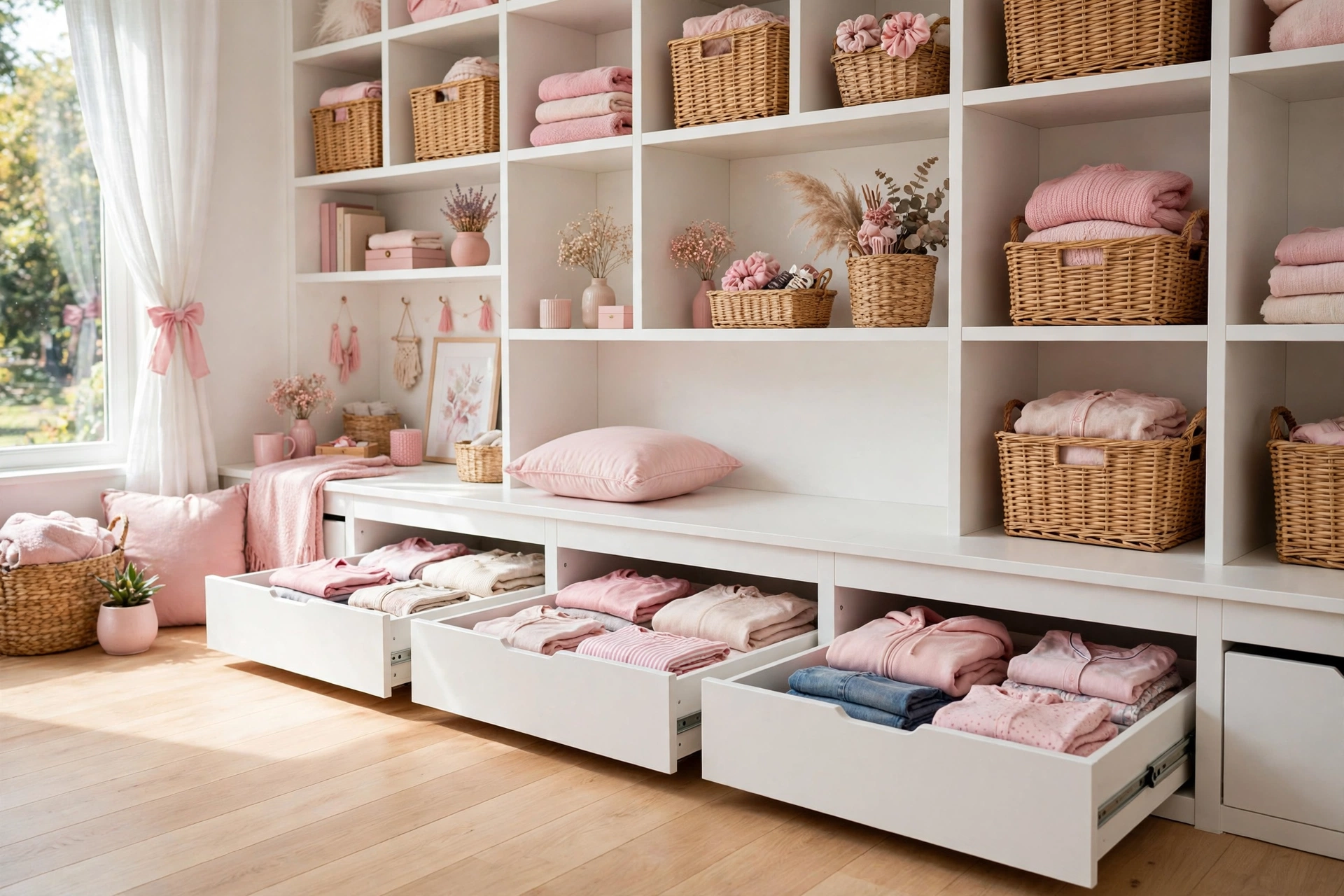
Closed storage at her height, sized for the categories she owns, keeps a girls bedroom floor clear without daily parental cleanup. An 8-cube organizer with fabric bins handles the daily load in most rooms: books, dolls, art supplies, and off-season clothes each get a home. Bins cost $4 to $7 each, and a full cube unit lands near $60 at most big-box stores. Label every bin with a picture for girls under seven. Reading labels comes later for younger kids, and pictures turn cleanup into a matching game she can win alone. Under-bed space adds a second tier: two rolling bins at 6 inches (15 centimeters) tall hold extra bedding and out-of-season clothes under a standard twin frame.
Anchor Every Tall Piece
Dressers and cube units tip forward when several drawers open at once. Federal stability rules under the STURDY Act (Stop Tip-overs of Unstable, Risky Dressers on Youth Act) have applied to new clothing storage units since September 2023, and compliant units resist tip-over far better than older stock. Anchoring still matters for pieces already in the home. Anti-tip straps cost under $10 per piece and anchor into a wall stud in about fifteen minutes. Check the strap during the same six-month round as the bed hardware, since one habit covers both risks.

Give Her a Reading Nook and a Study Corner
Two small zones, a reading nook of roughly 9 square feet (0.8 square meters) and a study corner with a 36-inch (91-centimeter) desk, cover the quiet activities a bedroom must support beyond sleep. Zones tell her body where each activity happens. Sleep cues grow stronger when the bed holds no homework, and homework focus improves when the desk holds no stuffed animals. A bean bag chair near $40 anchors the nook beside a window or a quiet corner. Small rooms can borrow the nook space from under a loft bed, where a floor cushion and a battery lamp build the same retreat. Parents searching girls bedroom ideas usually land on photos of finished rooms, and zones explain why those rooms work in daily life.
Front-Facing Books for Young Readers
Toddlers pick books by cover, not by spine. Front-facing displays show the covers, and one rail shelf holds eight to twelve picture books within reach of a three-year-old. Rotate the selection every two weeks. Familiar covers lose attention fast, while a fresh row restarts the bedtime reading habit without a single new purchase. Libraries use the same display logic at child height, because browsing by picture builds early reading confidence years before chapter books arrive.
Layer Lighting for Sleep, Study, and Play
Layered lighting in three parts, ceiling light for general use, a desk lamp for homework, and warm accent light for wind-down time, matches light to activity across the whole day. One overhead fixture flattens everything and glares during reading. Warm white bulbs at 2700 kelvin (K) mimic evening light, while daylight bulbs at 5000 K push alertness at the wrong hour. Fairy lights draw about 5 watts per strand, so a plug-in timer runs them nightly for pennies per month. Social feeds collect girls bedroom ideas by the thousand, and fairy lights appear in nearly every photo for good reason: the glow turns plain walls into a backdrop. Social posts rarely mention the desk lamp, yet homework under a 60-watt-equivalent light-emitting diode (LED) desk lamp strains young eyes far less than a dim ceiling bulb.
Light and Sleep
Blackout curtains block streetlight and early summer sunrise, and lined panels stop up to 99 percent of incoming light in manufacturer testing. Dark rooms support steady melatonin patterns, the hormone rhythm that helps children fall asleep at a consistent time. Hang the blackout layer on its own rod behind a sheer panel. Daylight then softens through the sheer, while the sleep layer stays ready for naps and early bedtimes. Cordless curtain and blind designs remove a strangulation hazard that corded window coverings still pose in children’s rooms.
Decorate Walls Without Repainting
Peel-and-stick wallpaper, removable decals, and one framed gallery strip deliver a themed wall for $30 to $120, and every option comes down without paint or patching. Renters gain the most here, though owners benefit too when tastes change every year. A standard accent wall of 8 by 10 feet (2.4 by 3 meters) takes two rolls of peel-and-stick paper. Decals stick best on smooth, fully cured paint, and fresh paint needs three to four weeks before adhesive goes on top. Florals, stars, and rainbows lead decal sales for girls rooms, and a single $18 pack covers the wall above a twin bed.
Personal Details That Cost Little
A wooden name sign above the bed runs under $25 and marks the room as hers more clearly than any theme print. Laser-cut initials, growth charts, and photo clip strings fill vertical space that furniture cannot reach. Dresser knobs offer the cheapest furniture upgrade in the room: a full set of star or flower knobs costs under $15 and installs with one screwdriver. Keep frames light near the bed. Adhesive strips rated for the frame weight hold art safely, while loose nails beside a pillow create a hazard during rough play.
Plan the Room by Age
Each age band needs a different bed, a different storage type, and a different decor focus, and the plan below prices the change across all four stages. Buying for the next stage cuts repeat spending. Sequenced girls bedroom ideas prevent the classic mistake of buying a teen desk for a room that still needs toy bins. Notice the pattern in the rows: beds and desks get bigger, themes get quieter, and storage moves from open bins to closed doors.
| Age band | Bed | Storage focus | Decor focus | Typical spend at this stage |
|---|---|---|---|---|
| 2 to 4 years | Floor bed or twin with rail | Front-facing books, low open bins | Soft palette, wall decals | $250 to $450 |
| 5 to 7 years | Twin bed | Cube storage, under-bed bins | Name sign, reading nook | $300 to $600 |
| 8 to 12 years | Twin or loft bed | Desk drawers, wardrobe sections | Study corner, gallery wall | $400 to $800 |
| 13 to 17 years | Full bed | Closet system, vanity storage | Mature palette, layered lighting | $600 to $1,200 |
Total spend across childhood lands near $1,550 to $3,050 when furniture carries forward between stages. Repeated full makeovers at each stage pass $4,000 for the same room. Girls who share a room follow the same table with one change: bunk beds replace the single bed line, and each girl gets her own color at the accent layer only.
Set a Budget and Spend in the Right Order
A three-tier budget, $150 for a refresh, $600 for a partial redo, and $1,500 for a full room, covers nearly every girls bedroom project, and paint plus bedding deliver the largest visible change per dollar. Spend first on the bed and mattress, because sleep quality touches every school day. Paint comes second: two gallons of low-VOC (volatile organic compound) paint cost about $90 and change the room more than any single decor item. GREENGUARD Gold certified furniture and mattresses emit fewer chemicals than standard pieces, and the certification appears on the product page or hangtag of listed brands. Skip matched furniture sets. Individual pieces bought over time let you replace one failure without scrapping a whole suite, and mixed finishes read as collected rather than showroom-staged.
Where to Save and Where to Pay
Save on trend items: lamps, throw pillows, wall art, and rugs date quickly and drop in price every season. Pay for the mattress, the desk chair, and blackout curtains, because daily-contact items punish cheap construction within a year. One example makes the math plain: a $40 desk chair that cracks in March gets replaced by June, while a $120 chair with a steel frame serves from fourth grade through graduation. Secondhand stores suit wooden dressers and bookcases well, since solid wood survives decades and a $35 thrifted dresser often outlasts a $200 flat-pack unit.
FAQs
What color is best for a girl’s bedroom?
Blush pink, dusty lavender, and soft sage lead parent choices for 2026. Muted shades reflect light well, calm the room at night, and pair with white bedding at every age from toddler to teen.
Can a girl’s bedroom skip pink entirely?
Yes. Sage green, butter yellow, powder blue, and warm white all build girls bedroom schemes without pink, and texture from rattan, linen, and pale wood supplies the softness pink usually provides.
What size bed should a girl get at age seven?
A twin bed at 38 by 75 inches fits a seven-year-old with room to grow into the teen years. Add a guardrail near the wall gap and a washable mattress protector for nightly accidents.
How much does a girls bedroom makeover cost?
A surface refresh with paint, bedding, and decals runs about $150. Partial redos with a new bed and storage land near $600, and full makeovers with furniture, lighting, and curtains reach $1,500.
When should a toddler move from a crib to a bed?
Most toddlers move between 18 months and 3 years, or sooner once climbing out starts. A floor bed or a low twin with a rail keeps falls short during the first months.
Are loft beds safe for girls?
Yes, with conditions. The Consumer Product Safety Commission (CPSC) sets guardrail and ladder rules for loft beds, children under six should sleep low, and rails need a 5-inch (13-centimeter) rise above the mattress.
How do you make a small girls bedroom feel bigger?
Pale walls, a low-profile bed, and vertical storage pull the eye upward and free floor area. Mirrors across from a window double the natural light, and closed bins keep surfaces visually quiet.
Conclusion
Build the foundation once, and refresh the surface layers as she grows. Paint and bedding change in a single weekend. Furniture and storage do not move for a decade, because a twin mattress measures 38 by 75 inches (97 by 191 centimeters) at age five, and the same mattress measures 38 by 75 inches at age fifteen.