
A fireplace sets the layout of a room before anything else is chosen. Sofas face it, rugs centre on it, and guests look at it first. That makes fireplace ideas worth planning carefully, because the surround, the fuel type, and the wall around it decide how the whole room reads.
This guide covers how to choose a fireplace type, twelve design ideas with approximate costs, a comparison table, mantel styling, and the safety checks that most idea lists skip.
What Are the Best Fireplace Ideas?
The best fireplace ideas are a painted or tiled surround, a simple stone or wood mantel, built-in shelves on both sides, and a fuel type that suits your home. Each one gives the room a clear focal point without a full rebuild.
If your budget is limited, start with paint. A fireplace surround repainted in a deep green or soft white costs under $100 in materials and changes the room in a weekend, whereas replacing a surround can cost several thousand.
How Do You Choose a Fireplace Type?
You choose a fireplace type by matching the fuel to your chimney, your budget, and how often you plan to use it. Wood-burning stoves give the most heat, gas fireplaces give the most convenience, and electric fireplaces need no chimney at all.
Wood-Burning Fireplaces and Stoves
A wood-burning stove heats a room far more efficiently than an open fire, because the closed firebox keeps more heat in the room. It needs a working flue, a non-combustible hearth, and regular chimney cleaning. In the UK, check whether you live in a smoke control area before you install one.
Gas Fireplaces
A gas fireplace starts at the push of a button and needs no wood storage, but it does need a gas line and a vent. Direct-vent models seal the firebox from the room, which makes them a good fit for a bedroom or a small living room. A licensed installer should fit and test the supply.
Electric and Bioethanol Fireplaces
Electric and bioethanol fireplaces need no chimney, so they suit flats, new builds, and rooms that never had a fireplace. Electric models plug into a standard socket and give a flame effect with optional heat. Bioethanol burners need no flue, although they still need ventilation and careful refuelling.
12 Fireplace Ideas for Every Room
Each idea below states what it does, roughly what it costs, and when it works best.
1. Paint the Surround
Painting a surround in a deep or contrasting colour turns a dull fireplace into a feature for under $100. Use heat-resistant paint on any surface near the firebox. Dark green and charcoal look rich in a living room, while soft white keeps a small room light.
2. Tile the Fireplace Face
Tile adds pattern and colour, and it is easy to wipe clean. Handmade ceramic tiles, zellige, and encaustic patterns all suit a surround. Expect roughly $500 to $2,000 including labour, depending on the tile and the size of the opening.
3. Choose a Stone Surround
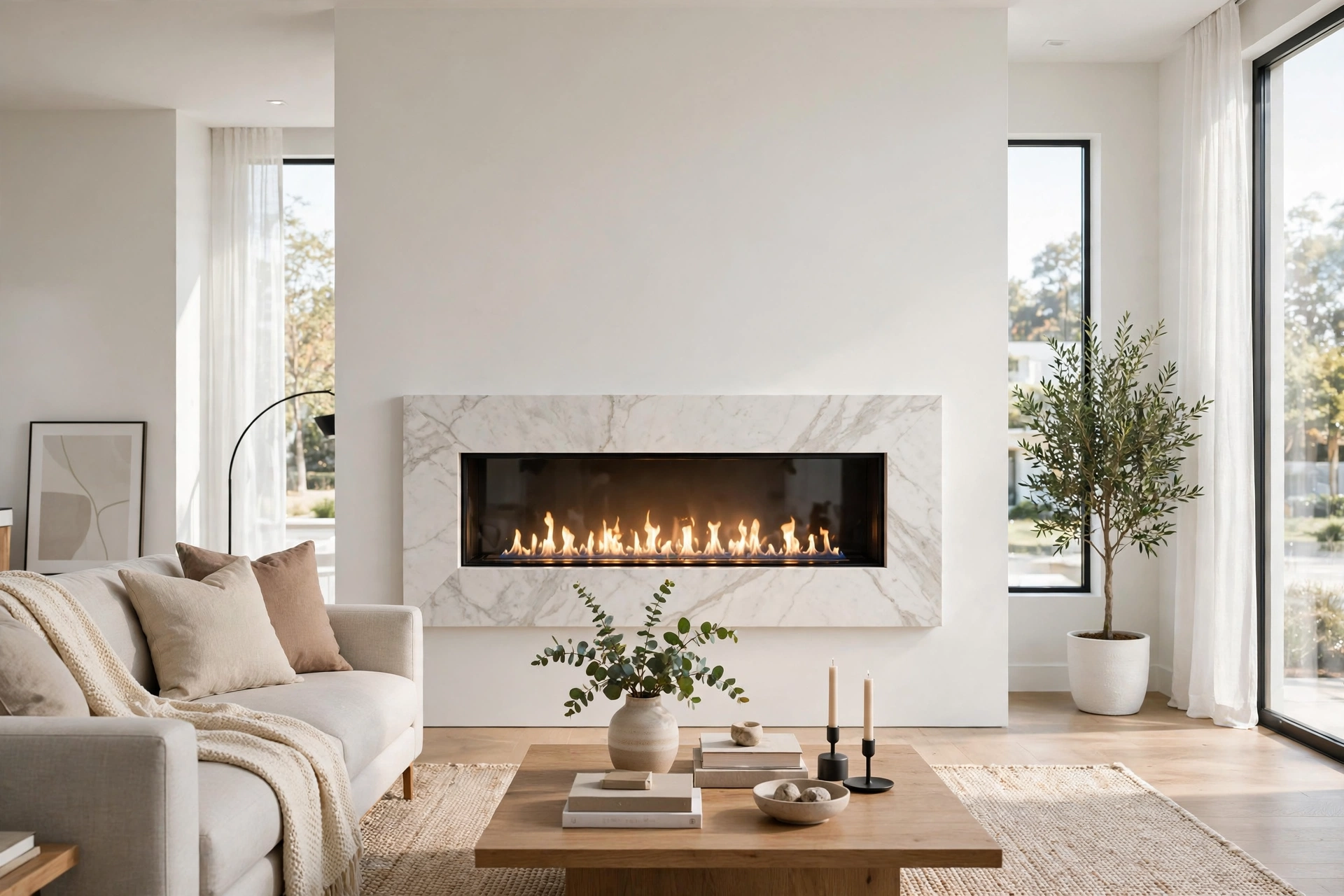
Natural stone, such as limestone or marble, gives a fireplace weight and a timeless look. Stone tolerates high heat and ages well, although it costs more than painted wood. Marble surrounds typically start in the low thousands, and slab prices rise quickly with rarer colours.
4. Expose or Whitewash the Brick
Exposed brick gives character, and whitewashing it makes a dark room brighter. Brush on diluted masonry paint for a soft, uneven finish. A can of masonry paint and a brush cost around $60 to $120.
5. Build In Shelves on Both Sides
Built-in shelves on both sides of the chimney breast add storage and frame the fireplace. Use the lower cabinets for logs, games, or media equipment, and the upper shelves for books and ceramics. Custom carpentry costs $1,500 to $6,000, while a flat-pack hack costs far less.
6. Add a Statement Mantel
A solid mantel in oak, pine, or reclaimed beam gives the fireplace a strong horizontal line. A mantel should extend about 2 inches (5 cm) past the chimney breast on each side. A DIY beam mantel costs about $100 to $400.
7. Install a Freestanding Stove
A freestanding stove gives the most heat per square foot and suits both modern and cottage rooms. Match the stove output to the room size, because an oversized stove makes people open windows to let the heat out. Installed prices typically run $2,500 to $7,000.
8. Use a Fireplace Without a Fire
A decorative fireplace with candles, plants, or stacked logs gives the look without the maintenance. This works well when the flue is blocked or the chimney is no longer in use. Always have a chimney checked before you reopen it.
9. Mount the TV with Care
A TV above a fireplace often sits too high, so check the viewing height before you drill. The centre of the screen should sit near eye level when you are seated, which is usually 42 to 48 inches (107 to 122 cm) from the floor. If heat rises from the firebox, use a mount with a tilt and keep the TV out of its path.
10. Add a Mirror or Large Artwork
A large mirror or a framed piece above the mantel draws the eye upward and bounces light around the room. Lean it for an informal look, or hang it centred on the chimney breast. Choose a piece about two thirds the width of the mantel.
11. Frame It with Panelling or Cladding
Panelling or timber cladding turns a plain chimney breast into a feature wall. Slatted wood, shaker panels, and painted board-and-batten all work. Materials cost about $200 to $800 for an average wall.
12. Choose a Corner or Double-Sided Design
A corner fireplace saves floor space, while a double-sided one divides an open-plan room. Double-sided fires suit a kitchen-living space, since the flame is visible from both zones. They cost more to install, so a professional design plan is worthwhile.
Fireplace Ideas by Type and Cost
The table below compares the main fireplace types by approximate installed cost, heat output, and best use. Figures are estimates for US prices and vary by region, chimney condition, and supplier.
| Type | Approx. Cost | Heat | Needs a Chimney? | Best For |
|---|---|---|---|---|
| Wood-burning stove | $2,500 to $7,000 | High | Yes | Cottages, larger rooms |
| Open wood fireplace | $3,000 to $10,000 | Low | Yes | Period homes |
| Gas fireplace | $2,000 to $6,000 | Medium to high | Vent required | Convenience |
| Electric fireplace | $150 to $1,500 | Low to medium | No | Flats, bedrooms |
| Bioethanol fireplace | $300 to $1,500 | Low | No | Modern interiors |
| Decorative, no fire | $50 to $500 | None | Not used | Blocked chimneys |
How Do You Style a Fireplace Mantel?
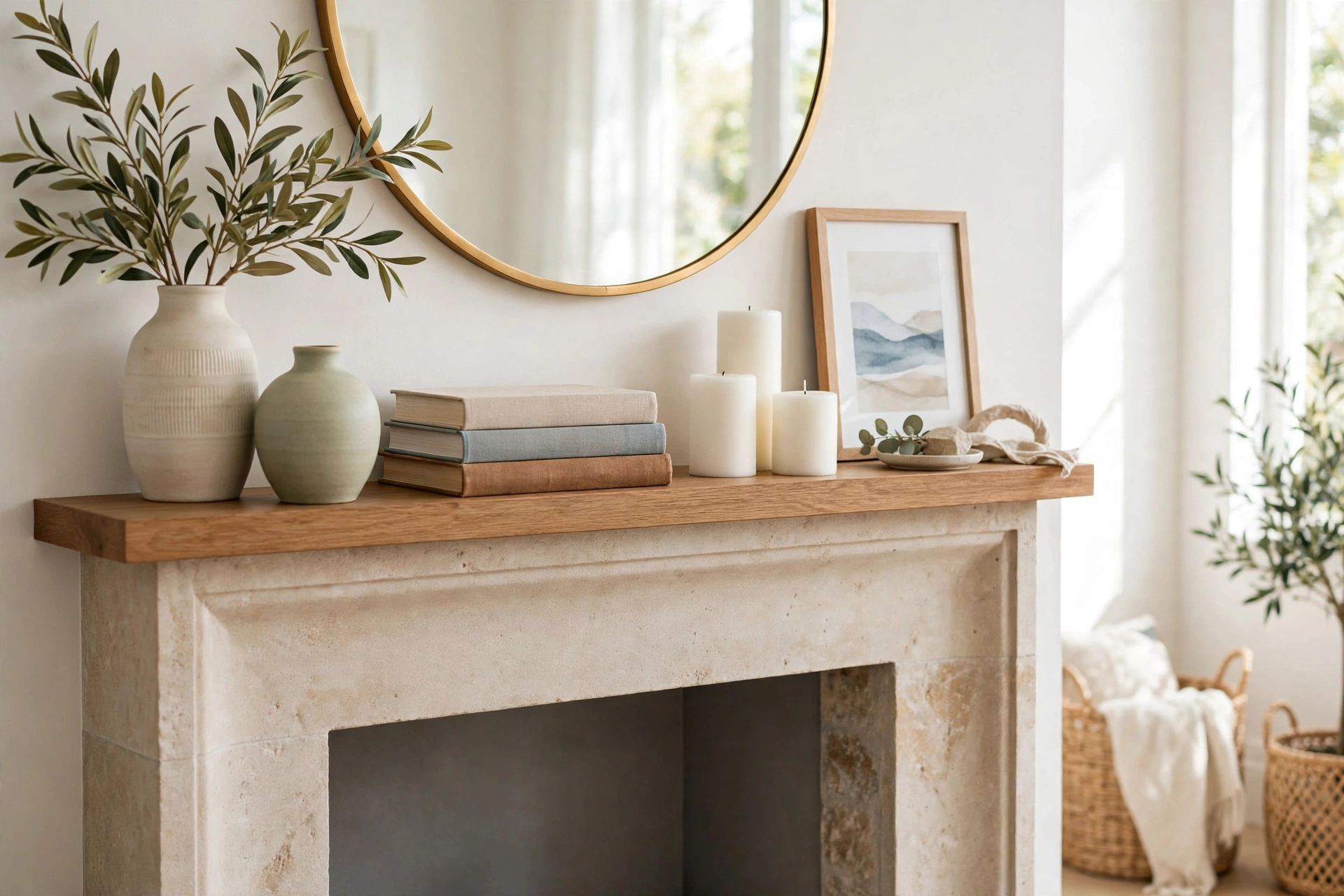
You style a mantel with three to five items of varied height, one living element, and one piece of art. Odd numbers look more natural than pairs, and a mix of heights keeps the eye moving across the shelf.
Start with a large mirror or print at the back, then add a pair of candlesticks, a small plant, and a stack of books. Leave open space, since a crowded mantel looks cluttered. For example, a white mantel with a green plant, a brass candlestick, and a framed print looks calm and balanced in almost any room. Swap items with the seasons to keep the display fresh.
What Colours Suit a Fireplace Wall?
Deep greens, warm greys, and soft whites suit a fireplace wall, because each one makes the surround stand out without competing with the room. A dark wall makes a white mantel stand out, whereas a white wall lets a dark stone surround take centre stage.
Use one strong colour on the chimney breast and a lighter shade on the other walls. Our guide to the living room colour combination shows wall and sofa pairings that work with this approach. Check any paint within reach of the firebox for a heat-resistant rating.
What Fireplace Ideas Suit a Small Room?
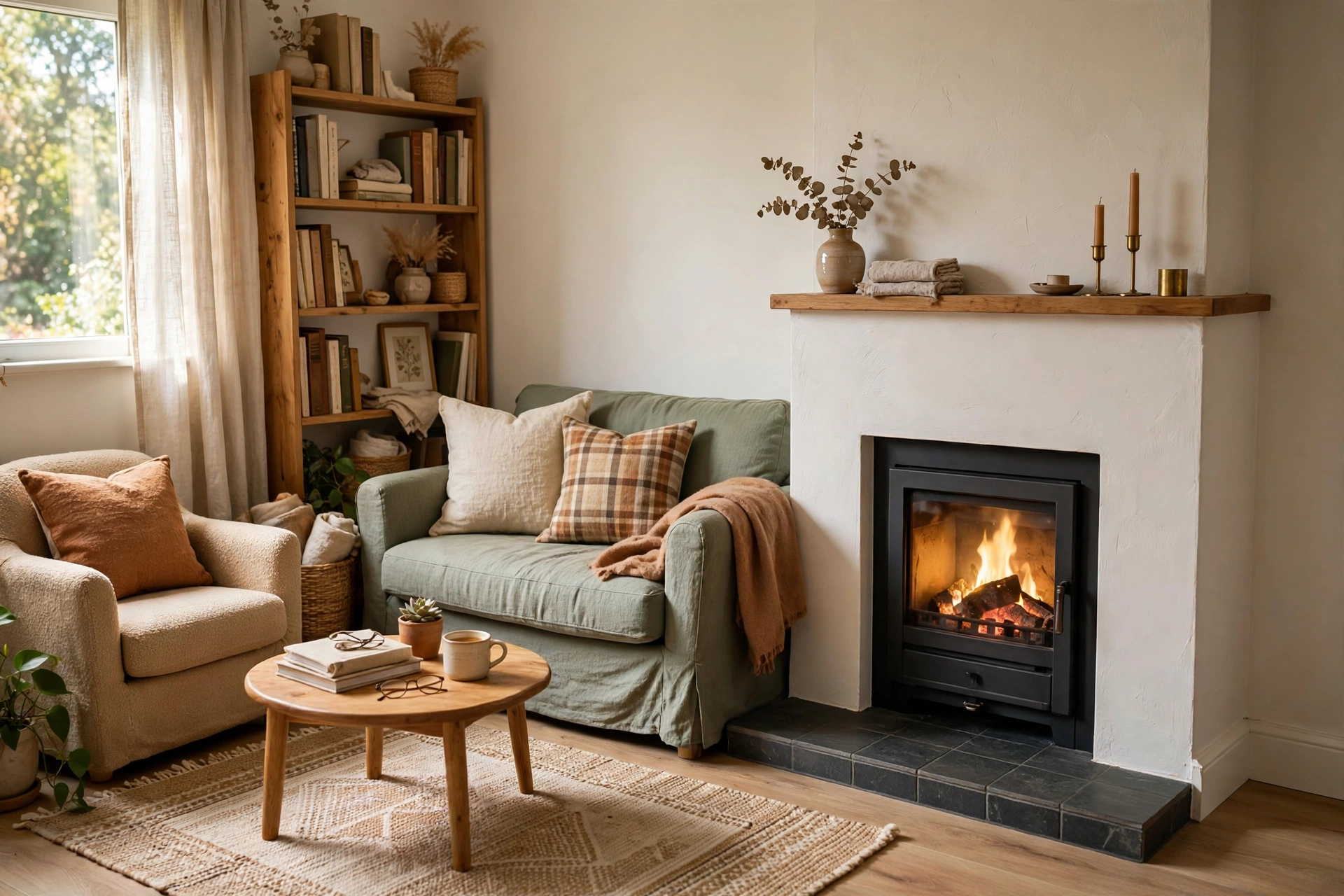
The best fireplace ideas for a small room are a slim electric unit, a corner stove, or a painted surround that matches the walls. Each one adds warmth without taking much floor space.
Keep the surround simple and the mantel shallow, around 6 to 8 inches (15 to 20 cm) deep, so it does not crowd the seating. Painting the surround the same colour as the walls helps it blend in, and a mirror above it doubles the light. If the room is under 120 square feet (11 square metres), a stove with a modest output is usually enough, since larger models overheat the space.
How Do You Make a Fireplace the Focal Point?
You make a fireplace the focal point by centring the seating on it, adding contrast to the surround, and keeping the surrounding wall simple. A room has only one main focal point, so remove competing features such as a second large artwork or a busy gallery wall.
Place the sofa and chairs so they face the fireplace or sit at right angles to it. Add lamps or wall lights on both sides, which gives the chimney breast a balanced glow in the evening. Finally, choose one strong element, such as dark paint, a stone slab, or tile, and let everything else stay quiet. For example, a charcoal surround against a pale wall reads clearly from across the room.
Fireplace Safety Checks Before You Start
Every fireplace project needs a chimney inspection, a carbon monoxide alarm, and the clearances listed in the installation manual. These checks matter more than style, because a good-looking fireplace is only worth having if it is safe to use.
Have the flue swept and inspected by a certified professional, such as a Chimney Safety Institute of America (CSIA) sweep in the US or a HETAS registered installer in the UK. Fit a carbon monoxide alarm in the same room, and keep a fireguard or fender in place if children or pets are around. Combustible materials, such as wood panelling and mantels, need the clearances stated in your stove or fireplace manual and in local building codes. As one UK example, a stove manufacturer asked for a gap of at least 100 mm between the stove body and non-combustible walls, and wider gaps for combustible ones.
Common Fireplace Design Mistakes
The most common mistakes are choosing an oversized stove, skipping the flue check, and hanging a mantel too close to the heat. Each one wastes money or creates a hazard.
Another frequent error is ignoring proportion. A surround that is too narrow makes the chimney breast look heavy, and a mantel that is too deep gets in the way of the room. Sketch the layout at full size with masking tape before you buy, and confirm the dimensions with an installer.
Conclusion
The best fireplace ideas start with the fuel type, then add a surround, mantel, and wall treatment in order of cost. Paint, tile, and a simple mantel are the cheapest upgrades, whereas a stove or a gas insert is the largest spend. Match the stove size to the room, keep a mirror or artwork above the mantel, and confirm every clearance in the manual before you start. A fireplace that is safe, well sized, and styled with restraint will stay the centre of the room for years.
FAQs
What is the cheapest way to update a fireplace?
Painting the surround is the cheapest option, typically under $100. Add a new mantel shelf or a mirror for a bigger change.
Can you put a TV above a fireplace?
Yes, if the heat is low and the viewing height is comfortable. Use a tilting mount and avoid placing it above a hot wood fire.
What is the best fireplace for a small room?
An electric or direct-vent gas fireplace suits a small room. Both give controlled heat and need little clearance.
How do you make a fireplace the focal point?
Use a bold wall colour, a statement mantel, and a mirror or artwork. Arrange the seating to face the fireplace.
Do you need a chimney for an electric fireplace?
No. Electric fireplaces plug into a standard socket and need no flue, which makes them practical for flats and new builds.
How far should a mantel extend past the fireplace?
A mantel typically extends about 2 inches (5 cm) past the chimney breast on each side. Check the clearance for combustible materials.
Is it worth keeping an old fireplace?
Often yes. An original fireplace adds character and can be restored. Have the chimney inspected before you use it.