
A tree looks planned when it uses two main colors and one accent, in a fixed ratio, under one shade of white light. It looks messy when every ornament is a different color, finish and size, which is why palette choice matters more than the number of ornaments.
This guide to christmas tree color schemes covers twelve palettes, a 60/30/10 ornament split for trees from 5 ft to 10 ft, the light color that suits each palette and the mistakes that make a tree look busy. Counts match our Christmas tree decorating guide, so the two pages work together.
What Are the Best Christmas Tree Color Schemes?
The best Christmas tree color schemes are red and green, red and gold, silver and gold, blue and silver, all white and pink and gold, each used with one accent color. If you want a safe choice that suits almost any room, pick red and gold with warm white lights.
Nearly Natural, a US retailer, lists jewel tones, all white, silver and gold, blue and silver, pink and gold, multicolor and orange and red. An Australian parenting site adds pastel, purple and natural palettes. Neither gives an ornament ratio, a count or a light temperature, so the sections below add those numbers.
How Do You Choose a Christmas Tree Color Scheme?
Choose a scheme in four steps: look at your room, pick two main colors, add one metallic or neutral accent, then match the light color. If you rent or expect to move, choose neutral colors that suit any room.
- Note the dominant colors in the room, such as wall paint, sofa and rug.
- Pick two main tree colors that either match those tones or contrast with them on purpose.
- Add one accent, such as gold, silver, white or natural wood.
- Choose lights in a warm, pure or cool white to suit the palette.
- Buy a few ornaments in each color first and test them on the tree before you buy more.
The Australian site Beanstalk Mums suggests neutral colors for renters, and traditionalists can stay with red, green and gold. Test the palette in the room’s evening light, since colors shift under lamps. A scheme that looks bright in a shop can look flat at home.
How Do You Split Colors on a Christmas Tree?
Use the 60/30/10 split: 60 percent of ornaments in the main color, 30 percent in the second color and 10 percent in the accent. If you use fewer ornaments, keep the same ratio and cut each color equally.
| Tree height | Ornaments (12 per ft) | Main color (60%) | Second color (30%) | Accent (10%) |
|---|---|---|---|---|
| 5 ft (1.5 m) | 60 | 36 | 18 | 6 |
| 6 ft (1.8 m) | 72 | 43 | 22 | 7 |
| 7 ft (2.1 m) | 84 | 50 | 25 | 8 |
| 8 ft (2.4 m) | 96 | 58 | 29 | 10 |
| 9 ft (2.7 m) | 108 | 65 | 32 | 11 |
| 10 ft (3 m) | 120 | 72 | 36 | 12 |
The 60/30/10 split is a well-known design rule of thumb, not a standard written for Christmas trees. It assumes 12 ornaments per foot (30 cm), the midpoint of the 10 to 15 range in our decorating guide. Round each number to the nearest whole ornament, and add or remove a few so the tree looks balanced from every side.
Check the lights first. The Christmas tree lights calculator converts height into strands, so you can buy the right amount in the right white.
Which Christmas Tree Color Schemes Can You Copy?
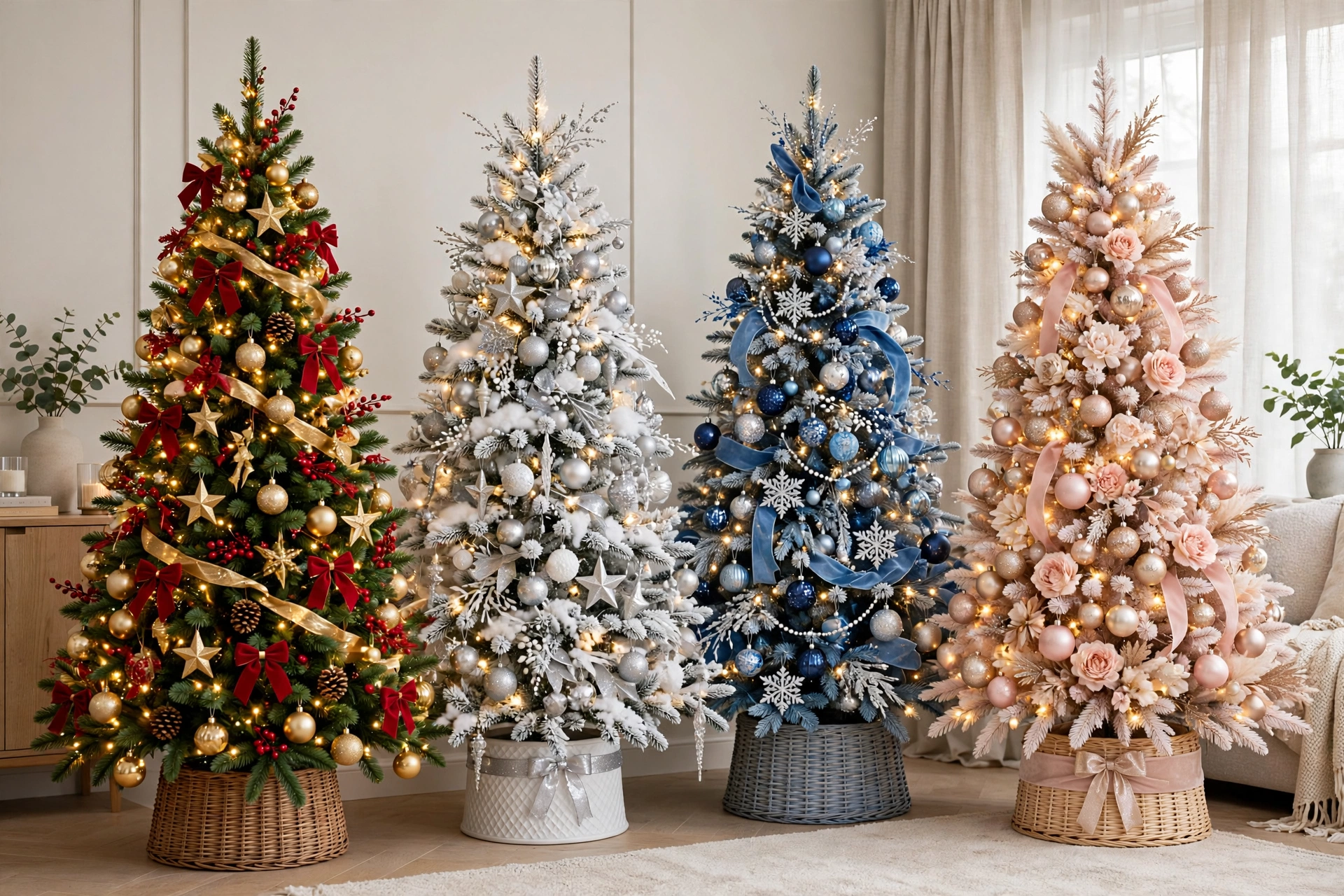
Pick one of the twelve palettes below, then keep it to two main colors plus one accent. If your room is neutral, almost every palette here works.
1. Classic red and green
Combine shiny red ornaments, velvet ribbon and tartan, then add holly picks. Warm white lights complete it. On a flocked tree, shiny green ornaments with red garland look striking.
2. Red and gold
Use 60 percent red, 30 percent gold and 10 percent cream or white. Add a gold star topper. This pairing suits traditional rooms with wood furniture.
3. Red and white
Homes & Gardens describes a red and white tree on a silver base, with glossy red baubles, matte white ornaments and candy canes. An oversized bow makes the topper. Warm white lights are the starting point.
4. Silver and gold
Mix gold poinsettias with silver stars and metallic ribbon, as Nearly Natural suggests. A gold tulle garland softens the look. Keep one metal slightly larger so the mix feels deliberate.
5. Blue and silver
Deep navy gives a classic look, while baby blue gives a softer one. Teal feels more modern. Add silver ribbon and blue glass ornaments, and use pure or cool white lights.
6. All white or flocked
Pair a white or flocked tree with frosted, pearl and glitter white ornaments. White pom-pom garland adds texture. Cool white lights keep the whole tree icy.
7. Pink and gold
Light pink ornaments with gold accents give a soft look, and bolder pinks add energy. Warm white lights bring out the rosy glow. Rose gold on a white or gray tree suits adult rooms.
8. Jewel tones
Layer emerald, amethyst, sapphire and mustard gold, and mix matte with shiny finishes. Faceted ornaments catch the light like gemstones. Use warm white lights to keep the colors rich.
9. Natural woodland
Use a real tree with wooden ornaments, dried orange slices, felt garland and hand-painted pieces. Keep the colors to red, cream and wood. Warm white lights complete the rustic feel.
10. Pastel
Combine pale pink, green and blue ornaments on a white or silver tree. On a green tree, keep ornaments light and add many string lights. Soft pastels suit a nursery or a bright living room.
11. Multicolor retro
Mix rainbow or retro colors with large bulbs and tinsel. Use only shiny or only matte ornaments so the colors read as one set. This palette suits a tree full of family ornaments.
12. Black and gold glam
Use black and gold baubles, a gold ribbon and metallic picks on a green or flocked tree. Warm white lights stop the dark ornaments from feeling heavy. Keep black to 30 percent or less.
Which Light Color Suits Each Palette?
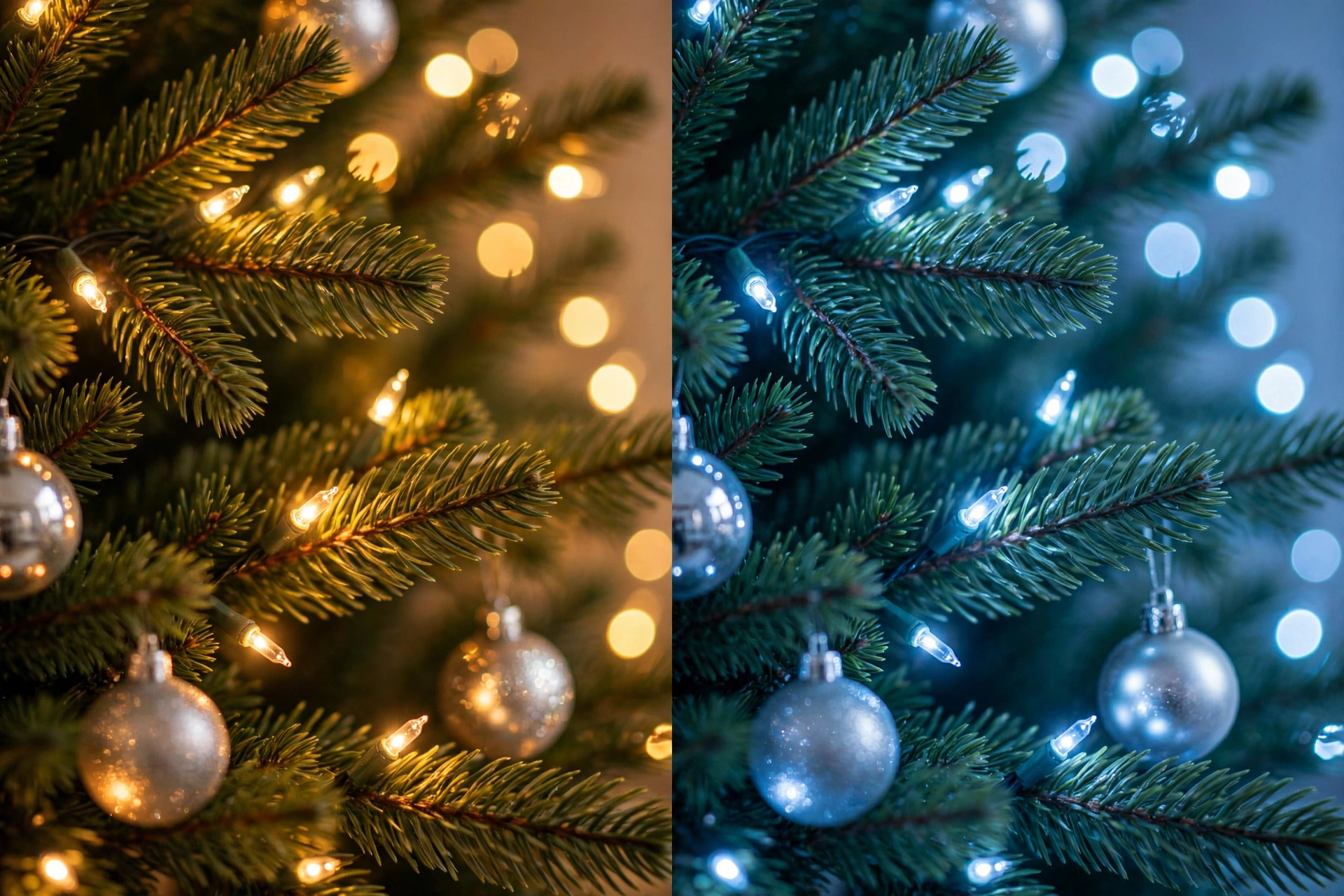
Warm white (about 3000K) suits red, gold and natural palettes, pure white (about 4600K) suits modern palettes, and cool white (about 6400K) suits silver, blue and white palettes. If you are unsure, warm white works with most colors.
The Kelvin values come from the standard lines at The Christmas Light Emporium, so other brands may differ a little. It describes warm white as golden and cozy, pure white as clean and balanced, and cool white as crisp and icy.
- Red and gold, classic and natural palettes: warm white.
- Pink and gold, jewel tones: warm white or pure white.
- Modern palettes with teal or pink: pure white.
- Silver, blue and all white: cool white.
Can You Mix Warm and Cool White Lights on One Tree?
No, not bulb by bulb, because the mix shows as stripes. If you want both, choose one dominant white and add the second only in a small, repeated pattern.
Buy all strands from the same line and year, since batches drift in color. Compare the whites at dusk, because room light changes how they look. A tree that uses 700 lights needs seven strands of 100, so check that each box shows the same color temperature.
How Does the Tree Color Change Your Palette?
A green tree supports every palette, while white, flocked and silver trees change how each ornament color reads. If you own a white or silver tree, choose richer ornament colors so they don’t wash out.
Green is the natural partner of red, gold and cream, so those colors pop on a green tree. White trees give strong contrast with deep navy, emerald and burgundy, while pale pastels need silver or pearl accents to show up. Silver trees reflect light, so one or two colors in matte finishes calm them down. Remember that a 6 ft (1.8 m) pre-lit tree with 600 lights already carries its own glow, so it needs fewer shiny pieces than an unlit tree.
How Do You Match Tree Colors to Your Room?
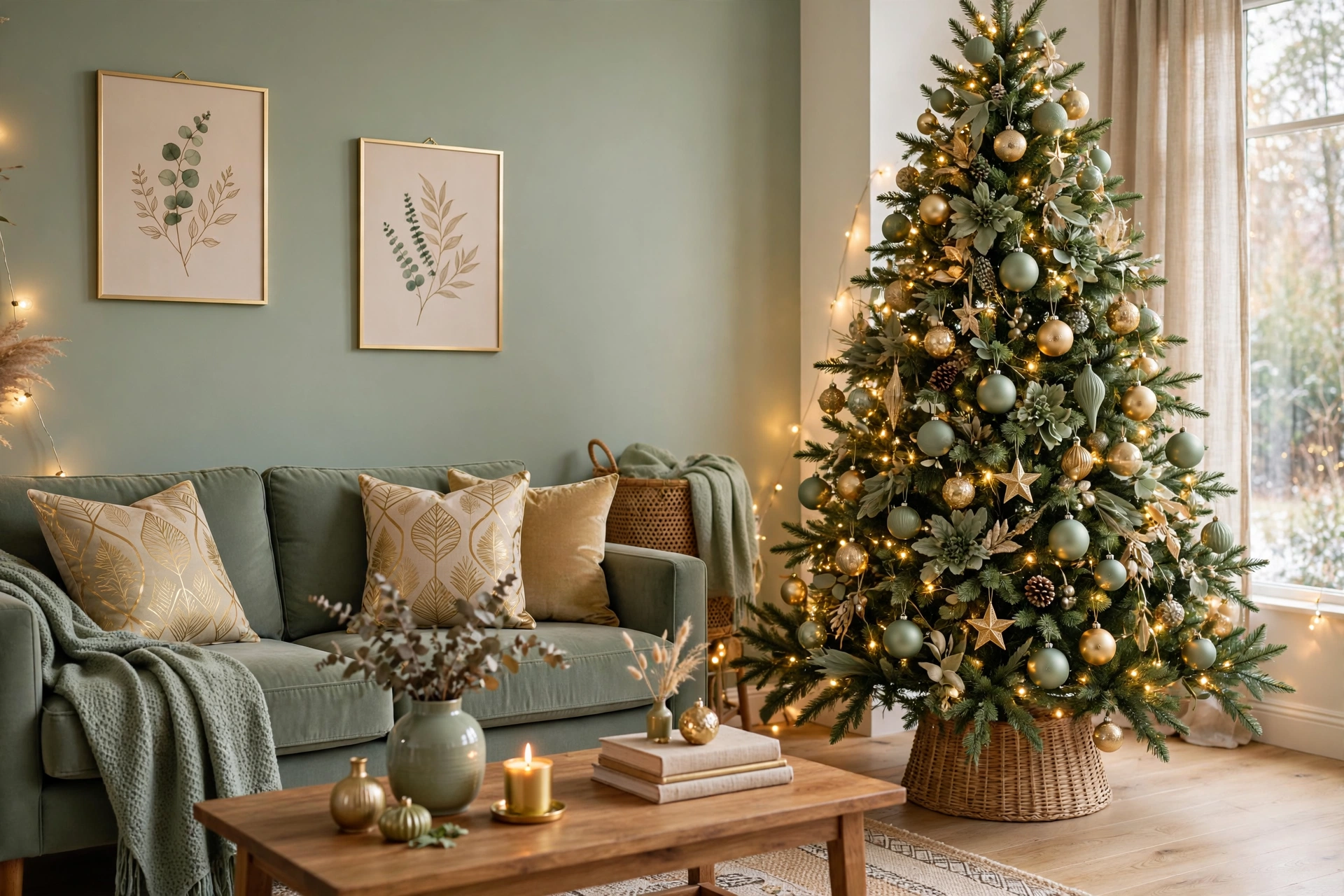
Repeat one or two room colors on the tree, and use the accent to bridge the gap between them. If the room is neutral, bring in a bolder palette such as jewel tones or red and gold.
Warm wood and brick rooms suit red, gold and natural palettes. Gray and white rooms suit silver, blue and pink. Let the same palette run through the home, so the tree, the table and the fireplace look related. Our guides to Christmas table decor ideas and Christmas mantel decor ideas use the same two-colors-plus-accent approach.
How Do You Mix Finishes and Textures?
Use two or three finishes in each color, such as matte, glossy and glitter, and spread them evenly through the tree. If you choose a multicolor scheme, use all shiny or all matte ornaments.
Texture adds depth when color is limited. A velvet ribbon, a wooden bead strand and a glitter pick can each carry one palette color in a different way. Keep the largest textured pieces near the center and the smallest at the tips.
What Mistakes Should You Avoid With Christmas Tree Color Schemes?
The most common mistakes are too many colors, uneven ratios and lights that fight the palette. Each one is easy to fix before the final step.
- Too many colors: stay with two main colors plus one accent.
- Uneven ratios: follow the 60/30/10 split.
- Clashing whites: use one light color temperature.
- Matching everything: add one contrasting accent for life.
- Ignoring the tree color: a white tree changes how every color looks.
Spending can climb when you change the palette, so the home decor budget planner helps you set a limit first. For other rooms, browse our home decor ideas.
When Should You Pick Your Christmas Tree Colors?
Pick the palette in early November, before you buy ornaments, and decorate around November 25 for Christmas Day on December 25, 2026. The planning step takes about 20 minutes.
Check the days left on the Christmas countdown timer, or count from any date with the days until Christmas calculator.
Conclusion
Good christmas tree color schemes rest on three choices. Pick two main colors and one accent, split the ornaments 60/30/10 and keep all the lights in one shade of white. Warm white suits red, gold and natural palettes, and cool white suits silver, blue and white ones. Repeat the palette on the table and the mantel so the whole room looks connected. A 7 ft (2.1 m) tree at 12 ornaments per foot takes 50 in the main color, 25 in the second and 8 in the accent.
FAQs
What are the most popular Christmas tree color schemes?
Red and green, red and gold, silver and gold, blue and silver, all white, and pink and gold. Classic red and green remains the top choice for most homes.
How many colors should a Christmas tree have?
Two main colors plus one metallic or neutral accent. Beyond three, a tree starts to look busy unless it is a deliberate multicolor mix.
What is the 60/30/10 rule for a Christmas tree?
Use 60% of your ornaments in a main color, 30% in a second color and 10% in an accent. A 7 ft (2.1 m) tree at 12 per foot takes 50, 25 and 8.
What color lights go with a red and gold tree?
Warm white lights, around 3000K, because they bring out gold and red. Cool white tends to flatten both colors and make them look pale.
Can you mix warm and cool white lights?
Not bulb by bulb, because it creates visible stripes. Pick one dominant white and use the other only as a small, deliberate accent.
What color scheme suits a small room?
White, silver and pale blue make a room feel larger, while a slim tree with one color and one metallic keeps things calm.
How do you make a multicolor tree look neat?
Use all shiny or all matte ornaments, and repeat each color evenly across the tree. A finish that matches keeps the colors from clashing.
When should you pick Christmas tree colors?
Before you buy ornaments, ideally in early November. Christmas Day falls on December 25 in 2026, and hanging lights around November 25 leaves time to shop.