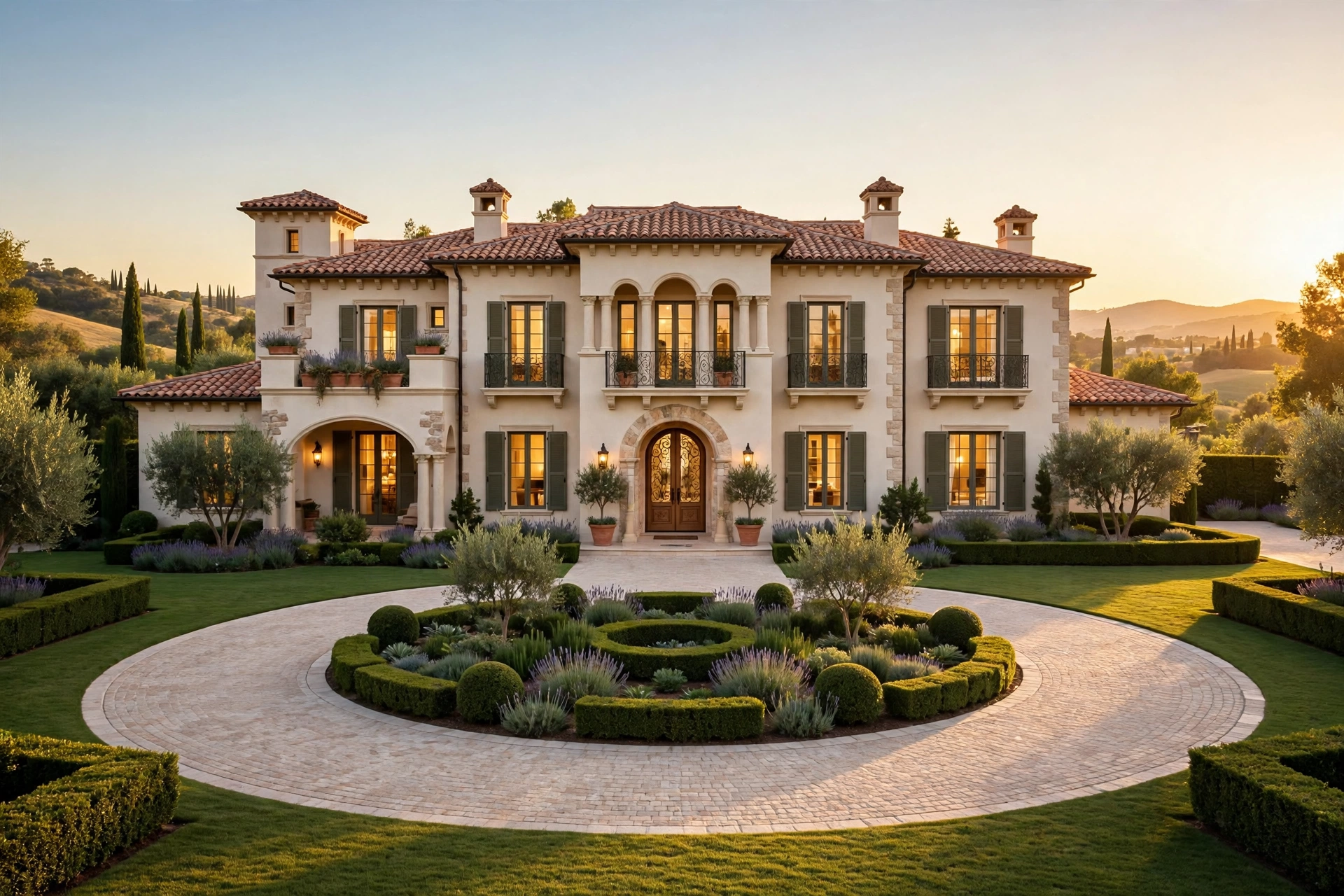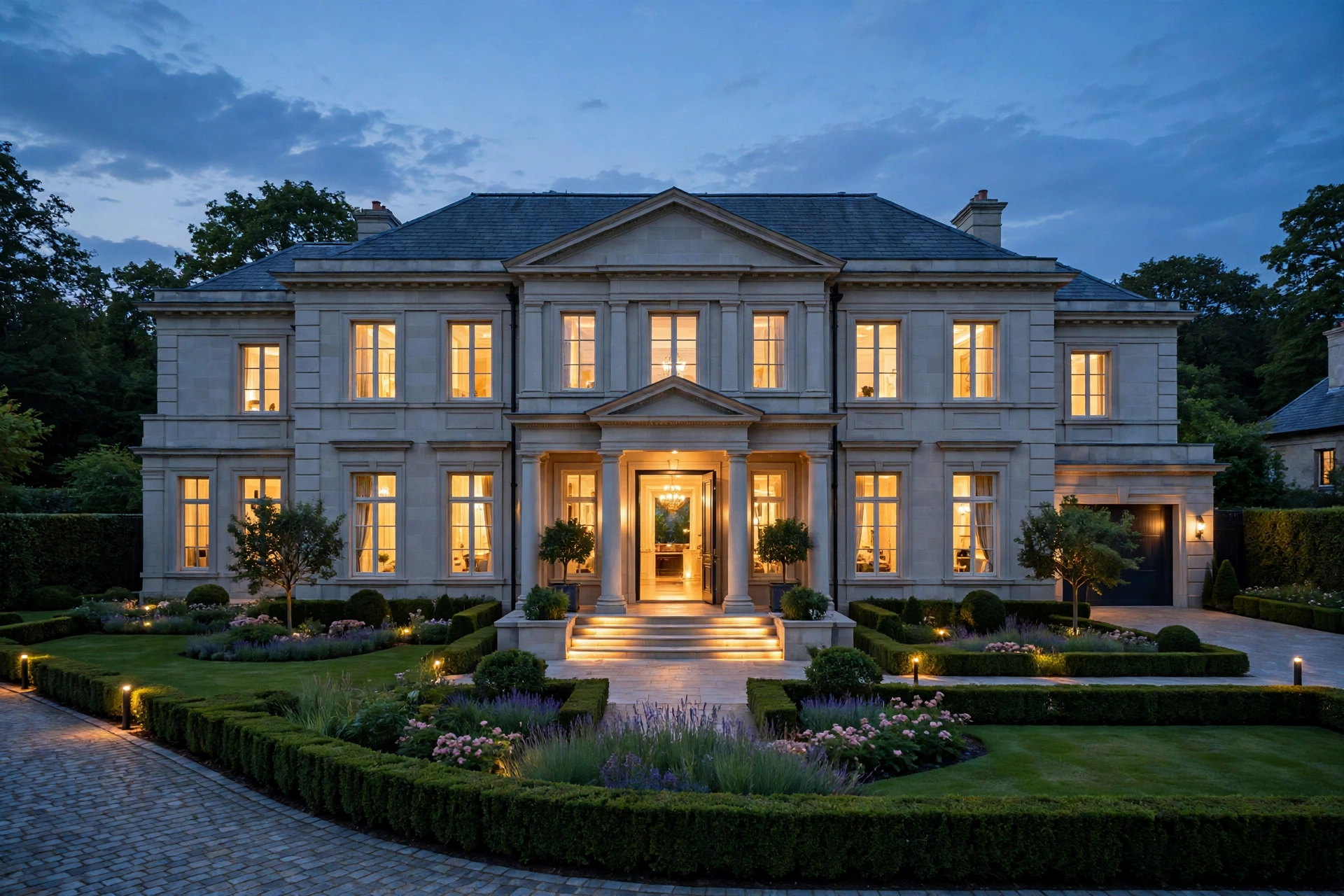

A single thread runs through every room people save on Pinterest: the palette repeats, the light sits low and warm, and nothing in the frame looks accidental. You don’t need a designer to copy that result. One named style, two or three colors, and a free weekend cover most bedrooms. This guide lays out the six main styles, the measured rules behind each style, and real 2026 prices, so your take on aesthetic room decor fits your floor plan.
What Is Aesthetic Room Decor?
Aesthetic room decor is a decorating method that builds one room around a single named style, a palette of two or three colors, and layered warm light. Social platforms turned the word aesthetic into a style label, and rooms earn saves when every object matches one clear mood. Boho, dark academia, and Danish pastel qualify as aesthetics because each name predicts colors, materials, and light before a photo loads. Picking the name first shrinks every later decision. A cottagecore room calls for floral cotton, pale wood, and dried flowers; a minimalist room calls for bare surfaces, linen, and one snake plant. You’re not copying a picture. You’re setting limits that make twenty small choices agree with each other.
Which Aesthetic Style Fits Your Room?
Six styles cover nearly every aesthetic room online in 2026: cozy neutral, boho, cottagecore, dark academia, Danish pastel, and minimalist. Match the style to the light and floor space you already have. North-facing rooms with weak daylight carry dark academia and cozy neutral palettes, since both styles lean on lamps more than sun. Small rooms under 120 square feet suit minimalist and Danish pastel layouts because pale colors and low furniture keep sight lines open. Renters lean boho and cozy neutral because textiles and plants do the work, and both leave with you at move-out.
| Style | Core Colors | Signature Pieces | Starter Budget |
|---|---|---|---|
| Cozy Neutral | Beige, cream, warm white | Chunky knit throw, linen bedding, rattan lamp | $60 to $120 |
| Boho | Terracotta, sand, sage | Macramé wall hanging, jute rug, woven baskets | $70 to $140 |
| Cottagecore | Cream, dusty rose, leaf green | Floral bedding, dried flower bundles, wicker basket | $65 to $130 |
| Dark Academia | Deep brown, forest green, burgundy | Tall bookshelf, vintage art prints, Edison bulb lamp | $90 to $180 |
| Danish Pastel | Lavender, baby blue, mint | Checkered cushions, wavy mirror, light wood desk | $80 to $160 |
| Minimalist | White, pale gray, black | Low platform bed, single plant, hidden storage boxes | $75 to $150 |
Can You Mix Two Aesthetic Styles?
Yes, two styles can share one room, with one style holding about 80 percent of the pieces and the second style supplying accents only. An 80/20 split keeps the room readable at a glance. Boho rooms borrow minimalist discipline well: rattan and jute carry the style, while clear surfaces stop the layers from reading as clutter. Three styles in one 10 by 12 foot bedroom don’t read as layered. The room reads as storage.
How Do You Choose a Color Palette for an Aesthetic Room?
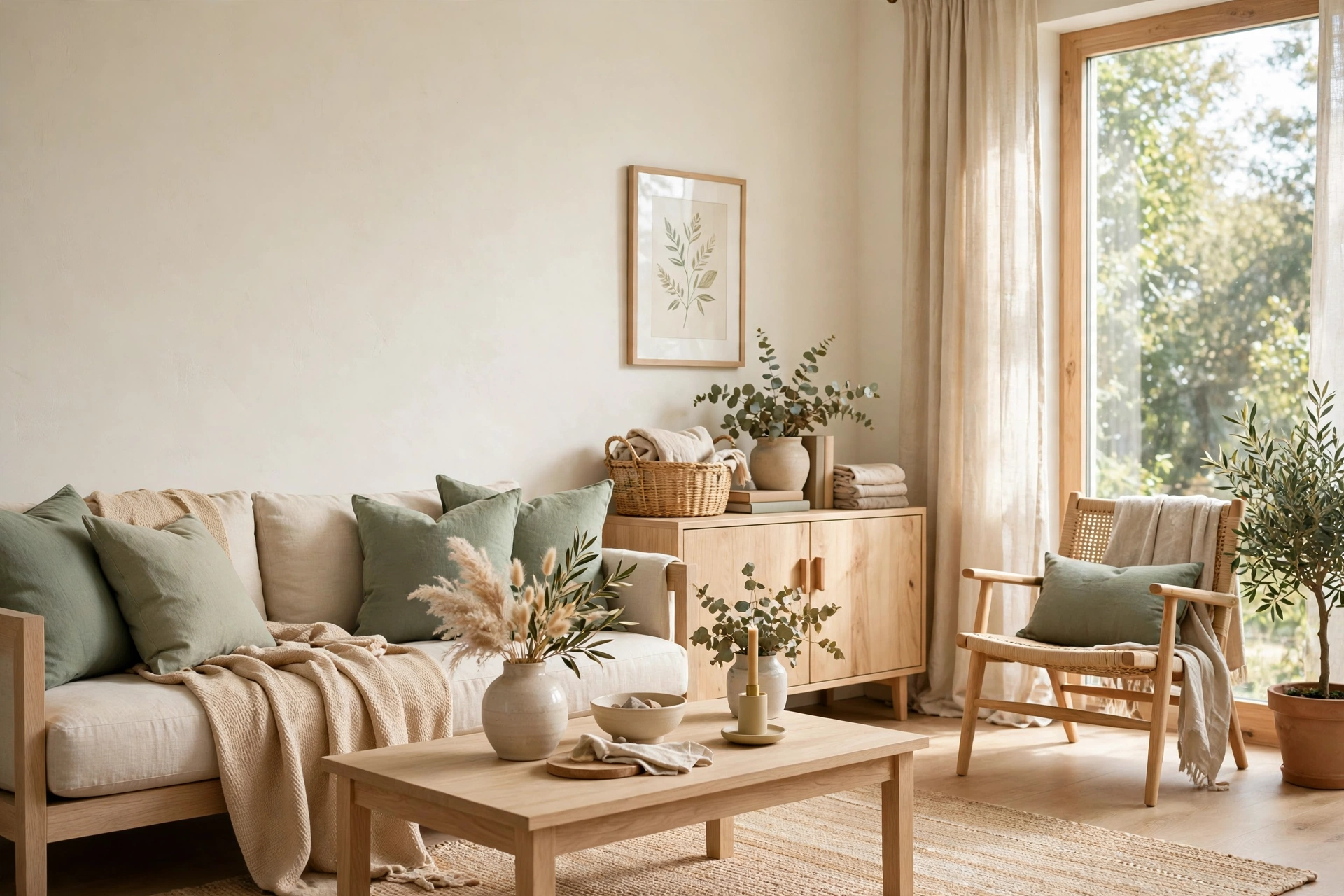
Choose two or three colors and repeat them in a 60-30-10 split: 60 percent base color, 30 percent secondary color, and 10 percent accent color. Walls, bedding, and the largest rug carry the base color, so a beige base with sage as the secondary color and terracotta as the accent lands on the surfaces first. Paint samples settle arguments faster than swatch cards do. Brush two coats on a 12 inch square of poster board, then move that board around the room at breakfast, noon, and dusk. Colors shift under warm bulbs, and sage that looks gray at noon often turns green at night. Metal finishes count as colors too: pick one finish, brass or chrome, and repeat the finish on the lamp, the frame edges, and the drawer pulls. Two metals in one small room read as a mistake, not a mix. Don’t skip the test board, if the room faces north, because north light cools every paint color by roughly one shade.

How Should You Layer Lighting in an Aesthetic Room?
Layer three light types in every aesthetic room: ambient light for the base, task light for reading and desks, and accent light for glow. Start with color temperature, the number printed on every bulb box in Kelvin (K). Warm white bulbs at 2700 K match the candlelit look in most saved photos, while 4000 K bulbs push a room toward office white. Light-emitting diode (LED) strips belong behind the headboard, under shelves, and along the desk edge, where the strip hides and only the glow shows. A 16.4 foot strip covers a queen headboard and one shelf run in a bedroom. Cords ruin more photos than bare walls do. You’ll keep runs flat with adhesive cable clips every 12 inches, and a $6 cable raceway hides the vertical drop to the outlet. Table lamps at 15 to 20 inches tall, a sunset lamp in the corner, and one string of fairy lights give you three pools of light at three heights, and that spread is what cameras read as cozy.
What Wall Decor Makes a Room Look Aesthetic?
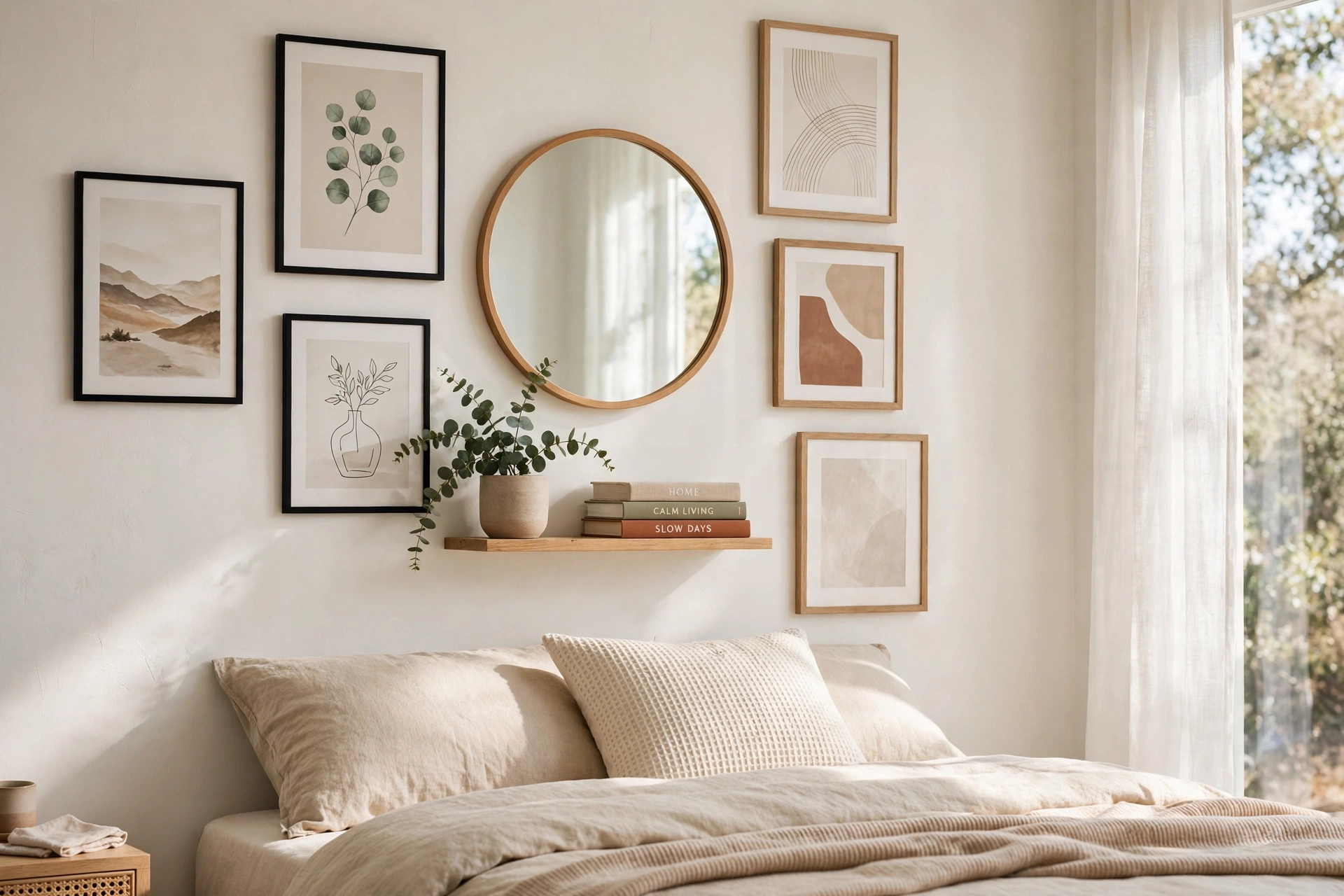
A gallery wall, one large statement piece, or a tapestry covers the main wall in most aesthetic rooms, and every option follows the same hanging math. Hang frames with centers at 57 inches from the floor, the standard height museums use, and leave 2 to 3 inches (5 to 8 centimeters) between frames. Six 8 by 10 inch prints in a two-row grid fill about 40 inches of wall above a desk, which suits a small bedroom. Paper templates save your plaster: tape the layout first, live with the shapes for a day, then drill. Renters get the same grid from removable adhesive strips rated for 7 to 16 pounds. Strips hold through a full lease, if you press each strip firmly for 30 seconds during mounting, and strips peel off clean at move-out. A tapestry measuring 51 by 59 inches covers the wall behind a twin bed without a single nail. Mirrors pull double duty across from a window, since the glass bounces daylight onto the darkest wall. One large mirror beats three small mirrors here, and its frame doesn’t need to match anything else in the room.
Which Textiles and Textures Belong in Aesthetic Room Decor?
Layered textiles carry the look: bedding in the base color, one textured throw, two or three pillows, curtains to the floor, and a rug sized to the bed. The bed takes the largest textile budget because the bed fills the most visual space. A cotton duvet cover in the base color, a chunky knit throw across the foot, and pillows in the secondary color repeat the palette three times. You don’t need matching sets; thrift stores sell single pillow shams in linen for $3 to $5, and singles mix better than sets do. Rug size decides whether the room looks planned or patched together. A 5 by 7 foot rug fits a twin bed with the front legs on the rug; a queen bed needs an 8 by 10 foot rug to keep 24 inches of border on both sides. Curtains hung 4 to 6 inches above the frame and pooled slightly at the floor make ceilings look taller. Fabrics need contrast to register on camera: pair smooth cotton sheets with a nubby bouclé cushion and a flat-weave jute runner, and the three textures read clearly even in dim light.
How Do You Add Plants and Natural Elements?
Plants finish an aesthetic room at three heights: one tall floor plant, one trailing plant on a shelf, and one small plant on the desk or nightstand. Species matter more than pot style. Pothos trails fast and tolerates low light, snake plants survive three weeks without water, and a ZZ plant holds its shape in a dark corner. North-facing rooms can’t grow sun-hungry herbs on the sill, so herbs belong in the kitchen and the bedroom gets the pothos. Dried pampas grass in a floor vase gives the height of a plant with zero watering, which explains the dried grass in half the rental listings online. Faux ivy vines pinned along a shelf edge copy the trailing effect for about $9 per 12 foot strand. Group plants in odd numbers and vary the pots: one ceramic pot, one woven basket, one plain terracotta pot. A single statement plant beats five small pots scattered at random, since scattered pots read as leftovers from other rooms.
How Much Does Aesthetic Room Decor Cost?
A full aesthetic room decor reset costs $50 to $400 in 2026, and the $150 tier covers paint, light, and textiles for most bedrooms.
- $50 tier: one gallon of paint, a 16.4 foot LED strip, and two thrifted pillow shams.
- $150 tier: the $50 items, plus a duvet cover set, a 5 by 7 foot rug, and six gallery frames.
- $400 tier: the $150 items, plus a statement lamp, curtain panels, and a tall plant in a ceramic pot.
Thrift stores and Facebook Marketplace cut furniture costs hardest; a solid wood dresser runs $40 to $80 secondhand, against $250 new. Spend on the items your skin touches and your eyes hit first: bedding and the main lamp. Save on frames, baskets, and vases, since glass and wicker look identical at every price point. Painting only the wall behind the bed halves the paint bill, and one gallon covers roughly 350 square feet with a single coat. Don’t buy decor before the paint dries; colors shift as paint cures over 48 hours, and early purchases often clash with the final shade.
How Do You Make a Small Room or Rental Look Aesthetic?
Small rooms and rentals turn aesthetic through the same three moves: pale base colors, furniture scaled to the floor plan, and decor mounted without holes. A 10 by 10 foot bedroom fits a full bed, a 36 inch desk, and one dresser, with no floor left for extras. Every extra piece must hang, fold, or stack. Peel and stick wallpaper covers one accent wall for about $30 a roll and removes with heat from a hair dryer. Over-door hooks hold mirrors and wreaths, while tension rods carry curtains inside the window frame with zero hardware. Storage hides in plain sight: lidded baskets slide under the bed, and a storage ottoman at the foot swallows spare blankets you don’t want on display. Landlords in most US states treat small nail holes as normal wear. Adhesive strips keep the deposit fully safe, if you photograph each wall before you mount anything.
What Mistakes Ruin Aesthetic Room Decor?
Four mistakes ruin most attempts: mixing three or more styles, buying decor before setting a palette, lighting the room with one cold overhead bulb, and covering every surface. Style mixing tops the list because each style pulls the palette a different way. A room holding boho textiles, industrial metal, and kawaii plush has three palettes at war. You can’t out-shop that fight; you end the fight by removing two styles’ worth of pieces. Cold light flattens everything under the bulb: a 5000 K bulb turns sage walls gray and makes beige bedding look dirty. Clutter hides the pieces you paid for. Edit surfaces down to groups of three objects, a rule stylists use on photo shoots, and leave one shelf or one wall section empty on purpose. Scale errors sneak in quietly. A 7 foot sofa in a 10 foot room eats the walkway, and art hung 12 inches too high floats away from the furniture the art belongs with.
In What Order Should You Decorate an Aesthetic Room?
Decorate in this order: clear the room, paint, set the lighting, hang wall decor, dress the bed, then add plants and small objects.
- Clear every surface and remove pieces outside the palette.
- Paint the walls and let the paint cure for 48 hours.
- Install lamps, strips, and bulbs at 2700 K.
- Hang the gallery wall or tapestry at 57 inches to center.
- Dress the bed and lay the rug.
- Place plants at three heights and style surfaces in groups of three.
Weekend one handles steps one through three for a standard bedroom. Weekend two finishes the room, and most people stop buying there because the room already photographs well. You’ll know the order worked when the last plant goes in and nothing else looks missing. Buy nothing during week one except paint and bulbs; early decor purchases belong to the old palette nine times out of ten.
Frequently Asked Questions About Aesthetic Room Decor
What Is the Cheapest Way to Make a Room Look Aesthetic?
Paint and light. One gallon of paint ($20 to $35) plus warm 2700 K bulbs changes color and mood in an afternoon, and rearranged furniture costs nothing.
Can Aesthetic Room Decor Work in a Rental?
Yes. Removable adhesive strips, peel and stick wallpaper, tension rods, and over-door hooks mount nearly every decor item without holes, and each method reverses clean at move-out.
How Many Colors Should an Aesthetic Room Have?
Two or three colors, split 60-30-10 across walls, textiles, and accents. A fourth color enters only as a plant green or a metal finish, never as paint.
Which Aesthetic Style Suits a Small Bedroom Best?
Minimalist and Danish pastel styles suit small bedrooms best. Pale palettes, low furniture, and hidden storage keep a 100 square foot room open, while layered dark styles shrink it.
Do LED Strip Lights Damage Walls?
Quality LED strips on smooth, fully cured paint usually peel cleanly. Test one short section behind furniture first, since cheap adhesive on fresh paint pulls chips loose during removal.
How Long Does an Aesthetic Room Makeover Take?
Two weekends cover a standard bedroom: one for paint and lighting, one for walls, textiles, and plants. Single-wall refreshes with prints and a lamp finish in three hours.
What Size Rug Fits Under a Queen Bed?
An 8 by 10 foot rug fits a queen bed, leaving about 24 inches of rug on both sides and at the foot. Twin beds pair with 5 by 7 foot rugs.
Are Faux Plants Acceptable in Aesthetic Room Decor?
Yes, quality faux plants count as acceptable in low light rooms and rentals. Mix one real plant with faux vines and dried grasses, and visitors rarely spot the swap.
Conclusion
Every style in this guide runs on the same parts: two or three colors, three light layers, one statement wall, and plants at three heights. The method does the heavy work, so the shopping list stays short, and the sequence doesn’t take a designer to run. A standard 10 by 12 foot bedroom holds a full bed, a 5 by 7 foot rug, three light sources, and gallery frames centered at 57 inches without crowding one walkway.